



Monastic State of Mount Papikion
The area seems to have been inhabited by ascetics and hermits long before the 10th century, but the great heyday of the monastic community, during which monasteries and communal buildings were built, is estimated to have occurred in the 11th and 12th centuries.
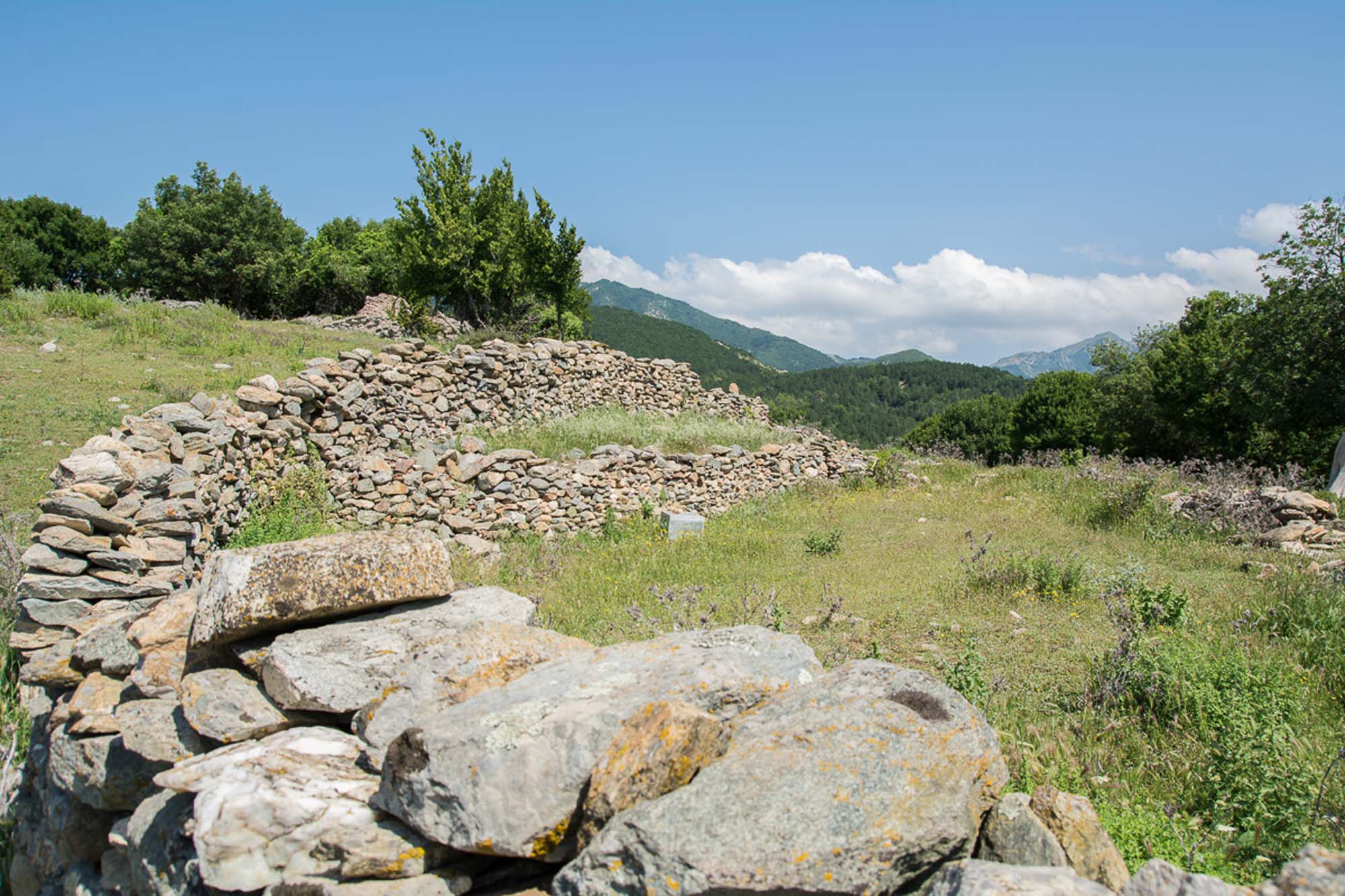
Excavations began in 1983, uncovering three single-aisle, Byzantine, domed churches that served as the catholicons (main churches) of small monasteries. Additionally, two monastic complexes and a Byzantine bathhouse were discovered, dating from the late 11th to the early 13th century. These single-aisle churches can be found in the region of Kerasia, with one located between Kerasia and Sostis.
Particularly striking is the monastic complex north of Linos, where important archaeological discoveries were made, including a remarkable cistern, exquisite mosaic floors and the tomb of Empress Maria Botaneiates. Another notable complex, a three-aisled basilica, is located north of Sostis. There is written evidence that Mount Papikion hosted pilgrims and secular visitors and was venerated by prominent figures of Orthodoxy, such as Gregory Palamas and Maximos of Kafsokalyvia. Mosynopolis was a significant Byzantine city and the seat of Voleros, a district located 6 km west of Komotini. It was founded by the Romans around 300 AD under the name Maximianopolis and has been referred to as Mosynopolis since the 8th century. Tragic events unfolded there involving the Byzantine emperors of the Komnenos–Angelos dynasty, just a few years before the region fell to the Crusaders in 1204. The city and its surrounding region were incorporated into the Kingdom of Thessaloniki, ruled by Boniface of Montferrat. He was killed just outside Mosynopolis during a skirmish with a Bulgarian detachment under Tsar Ivan I, known as Ivan the Terrible. The city gradually declined, and after repeated raids, it was abandoned by its inhabitants, who fled to Komotini and began building homes both within and around the castle. Excavations uncovered the city’s fortification and the remains of a particularly notable Episcopal Church. Visiting Mosynopolis and the ruins of the monasteries is possible only by prior arrangement with the Department of Antiquities of Rhodope, specifically the Department of Byzantine Antiquities (Contact number: +30 25310 35870).