



Megali Doxipara
At the beginning of the 2nd century AD, four members of a wealthy landowning family, who passed away in succession, were cremated and buried at the same location near the road connecting Hadrianopolis to Philippopolis. Over time, a large burial tumulus was gradually constructed on this site to preserve the memory of the deceased across centuries.
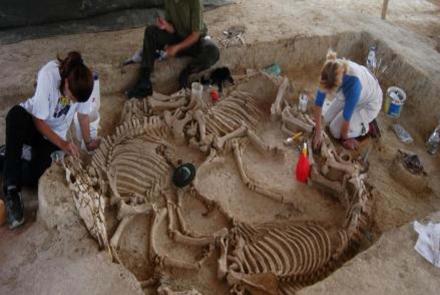
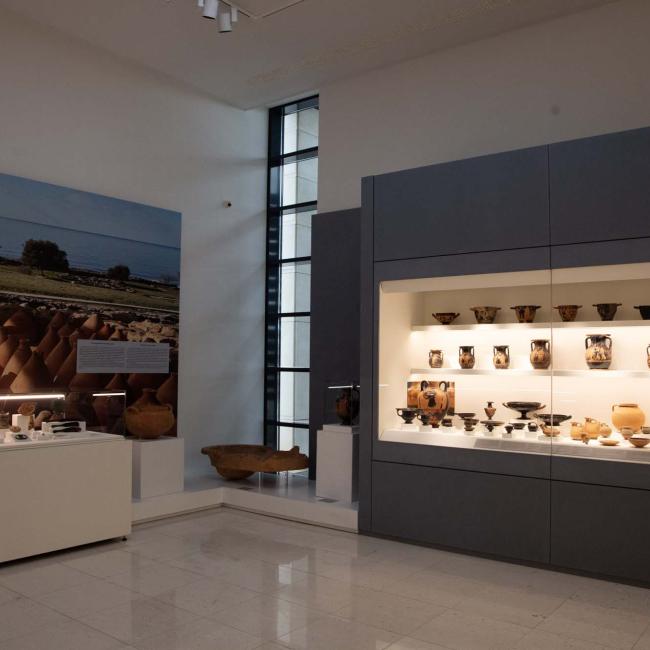
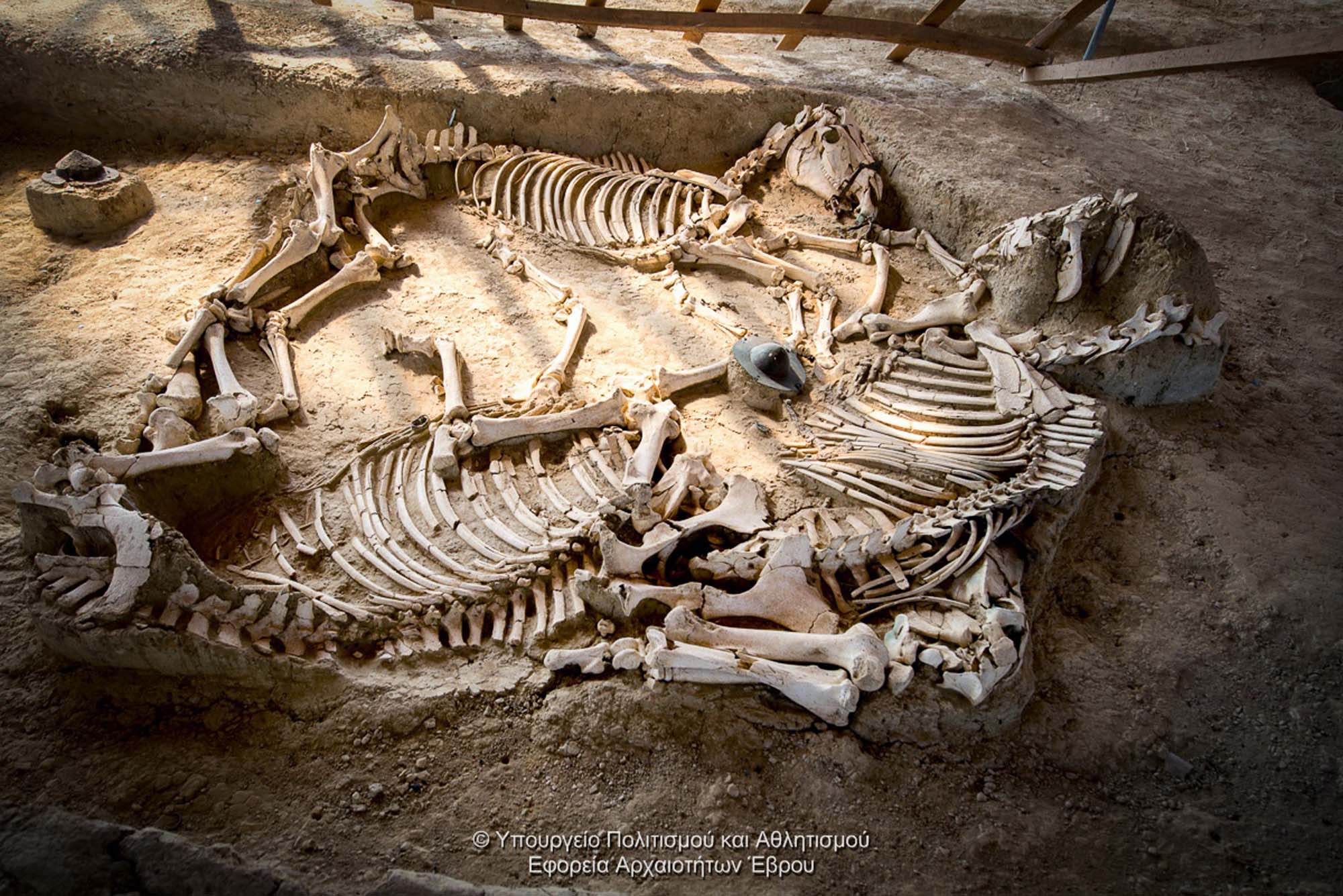
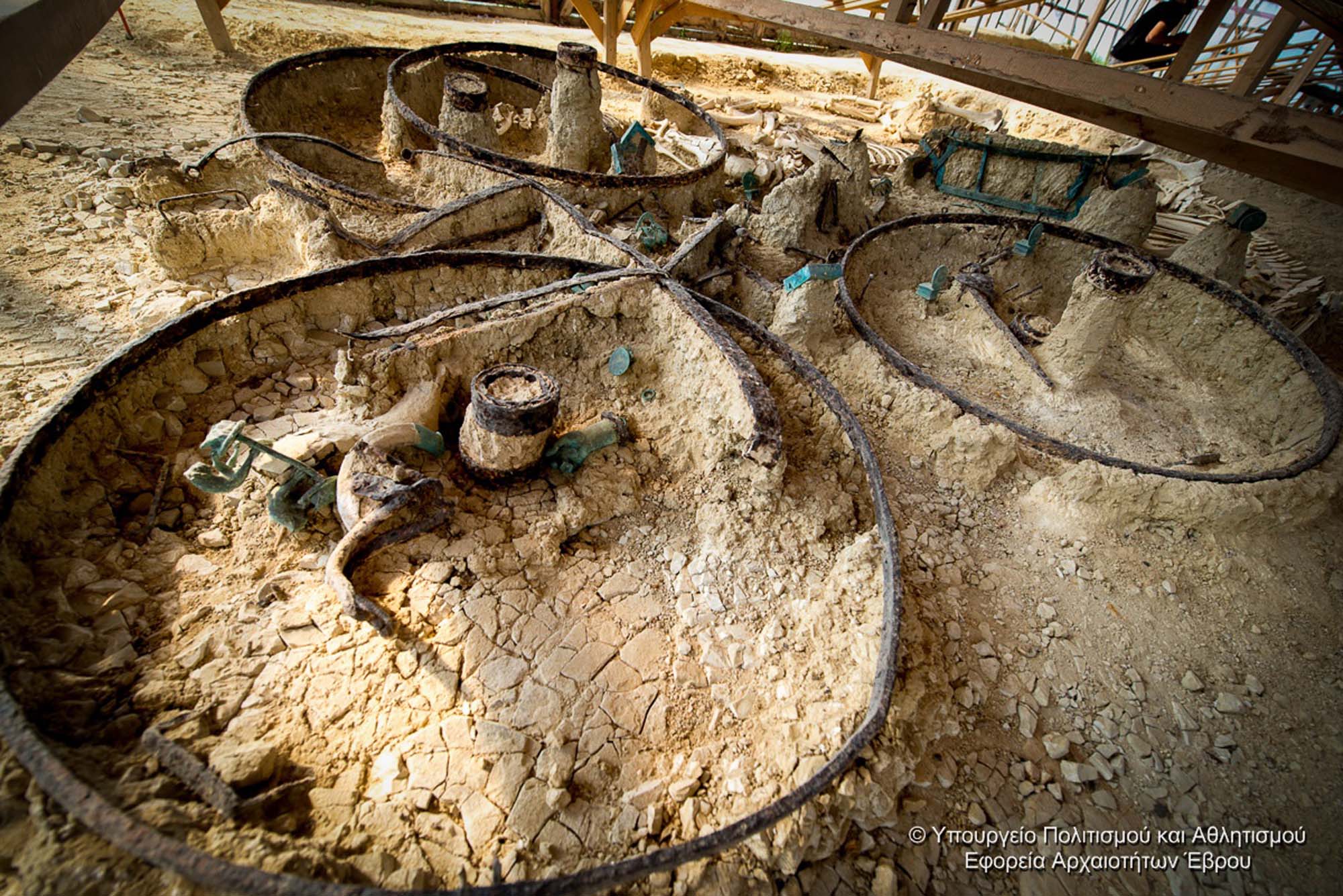
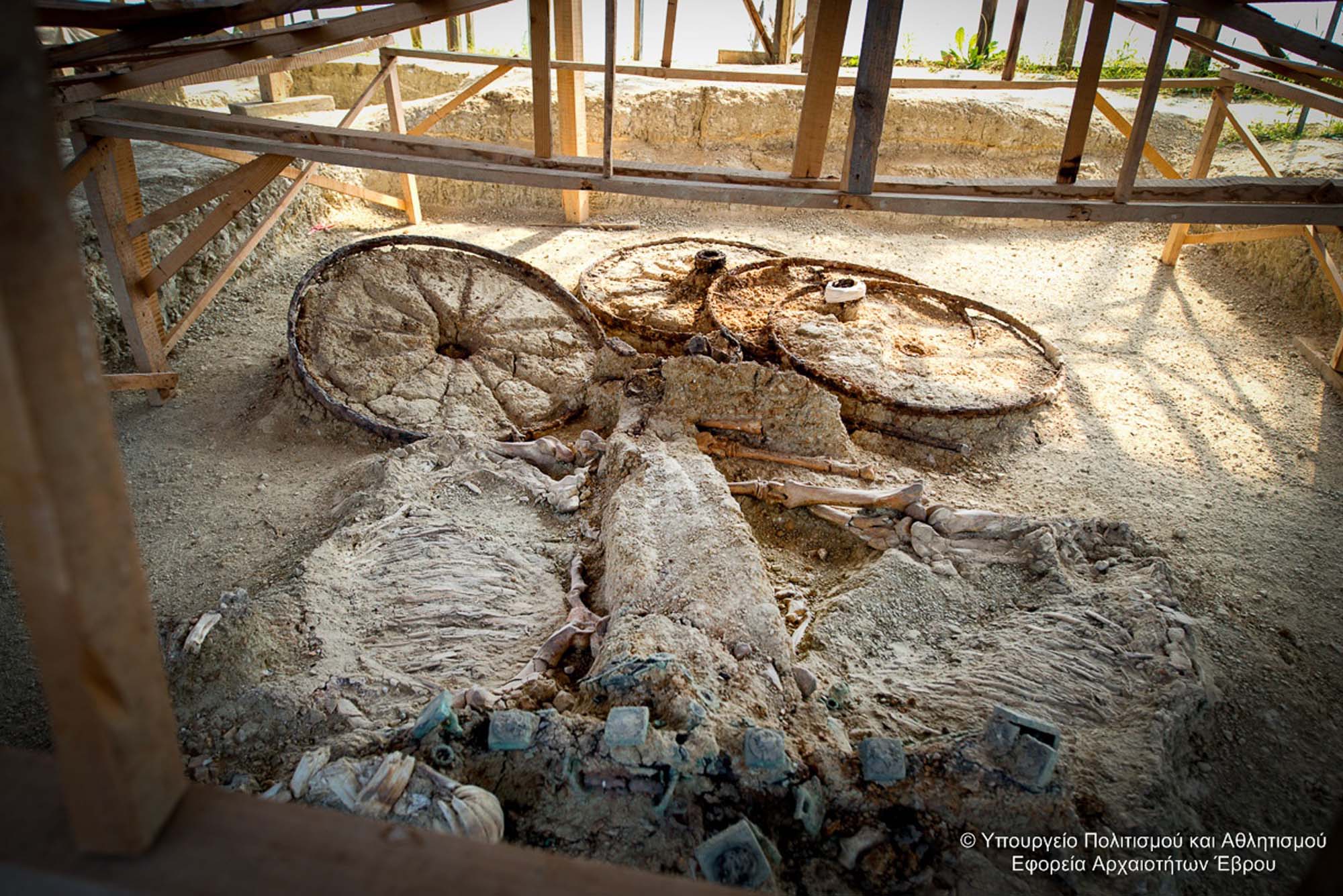
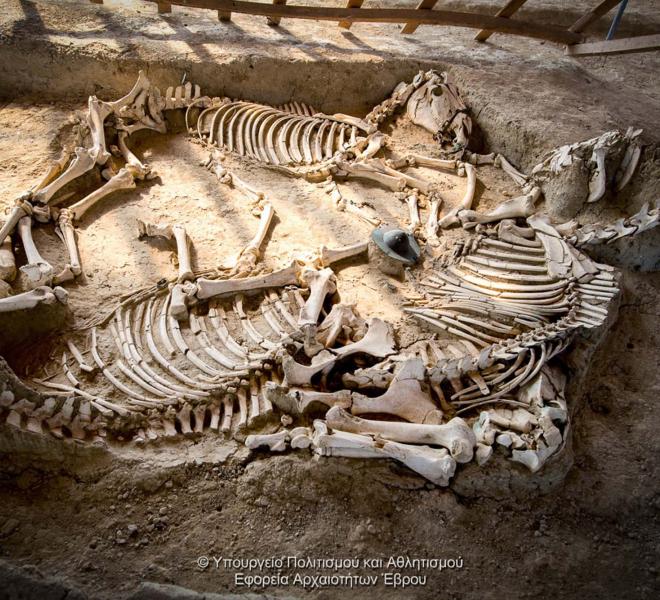
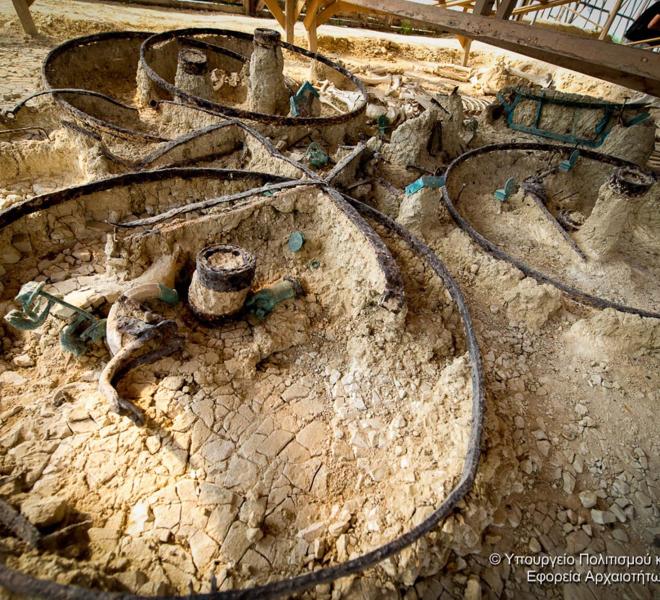
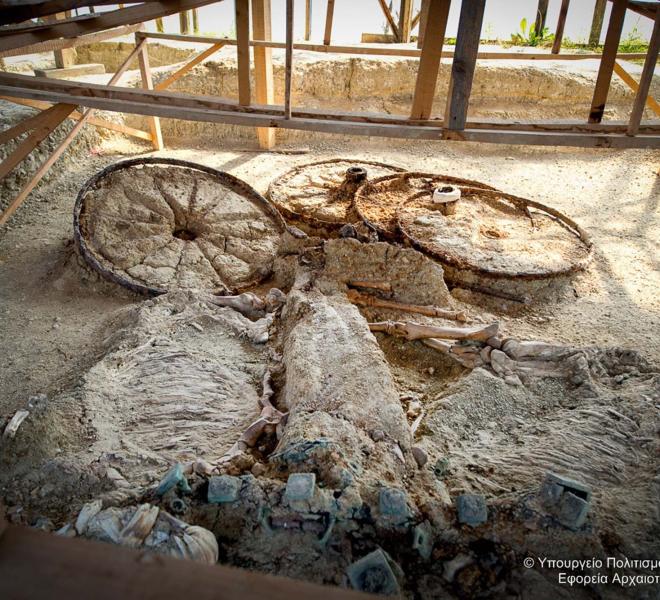
Today, the site belongs to the Municipality of Kyprinos and is located near the villages of Mikri Doxipara, Zoni, and Chelidona. Excavations uncovered four large pits containing the remains of the cremations of three men and one woman, along with numerous grave goods meant to accompany them to the afterlife. These included clay, glass, and bronze vessels, bronze candlesticks and lamps, bronze lanterns, weapons, jewellery, wooden caskets, and more. The five carriages used to transport the deceased to the burial site were interred alongside their remains, along with the remains of five horses buried next to them. The functional and decorative metal elements of all the carriages have been preserved, and two of the carriages also retain impressions of their wooden components.
The research at the burial tumulus of Mikri Doxipara-Zoni began in 2002, conducted by the 19th Ephorate of Prehistoric and Classical Antiquities of Thrace, a regional department of the Ministry of Culture. The excavation was led by archaeologists Diamantis Triantafyllos, then director of the Ephorate, and Domna Terzopoulou. The project has been fully funded by the Ministry of Culture.
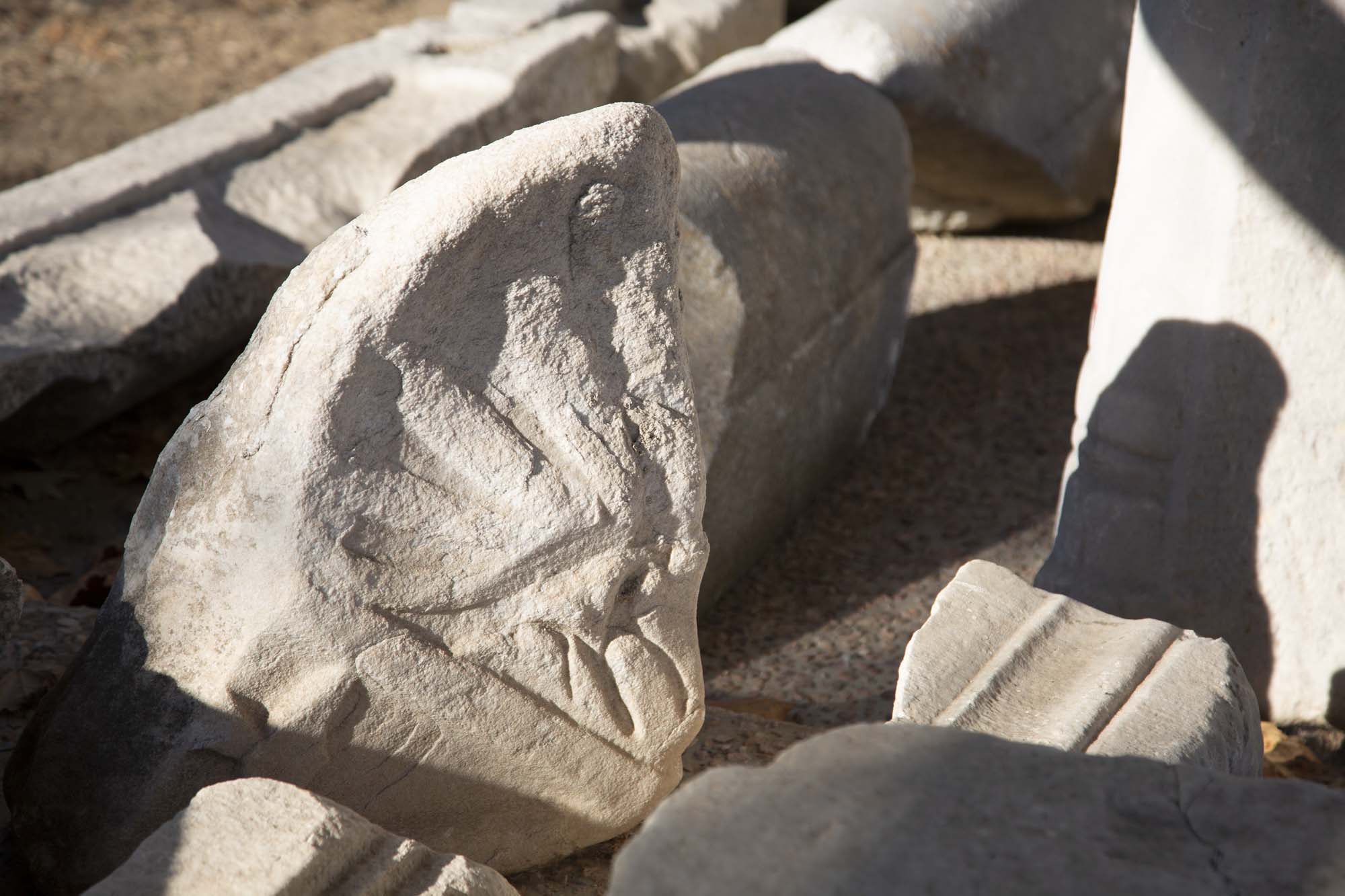
The excavation was of a salvage nature, as there had been numerous prior attempts to destroy the tumulus and loot the burials. The excavation was included in the rescue program for burial tumuli in northern Evros in 1998, following a report by local resident Thanasis Dermentzis, who pointed out the presence of illegal trenches on the tumulus' surface. The many fragments of worked marble and rubble scattered around the tumulus initially suggested that it covered a built tomb or sarcophagus. This hypothesis, however, was not confirmed. Today, it is believed that a built burial monument once existed atop the tumulus but has since been destroyed, or that the monument predated the tumulus and was covered by it later, or perhaps was located nearby.
In 1999, a topographic survey of the tumulus was conducted, and in 2000, a geophysical survey using ground-penetrating radar was performed by the Laboratory of Geophysics, Satellite Remote Sensing, and Archaeoenvironment of the Institute of Mediterranean Studies in Crete, led by Dr. Apostolos Sarris.
Excavation work commenced on September 9, 2002. A few days later, the wheels of the first carriage were uncovered. Four-wheeled carriages buried alone or with their horses have been discovered in many countries across Europe and Asia, but in Greece, they were unearthed for the first time at the tumulus of Mikri Doxipara-Zoni. The well-preserved condition of the carriages and horse skeletons, along with the wooden impressions on two of the carriages, provided a particularly vivid excavation image that the team worked diligently to preserve.
The excavation continued under challenging conditions throughout 2003, gradually uncovering the remaining four carriages, the burials of five horses, and the four large pits containing the cremated remains and numerous grave goods placed by relatives to accompany the deceased in the afterlife. Lightweight shelters were constructed to protect the carriages, horse burials, and cremations from weather exposure, allowing for the completion of the painstaking cleaning and uncovering process. The excavation was concluded in 2004. Today, the entire fill of the tumulus has been removed. The carriages and horse skeletons remain in situ, while the grave goods have been removed from the cremation pits.
Conservation of the carriages and mobile finds is ongoing.
The initial findings were presented in February 2003 in Thessaloniki during the annual meeting on Archaeological Work in Macedonia and Thrace, drawing significant attention from both the archaeological community and the general public.