



Byzantine Wall of Komotini
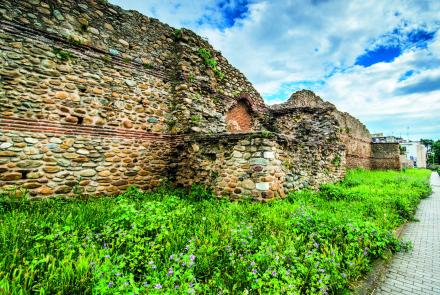
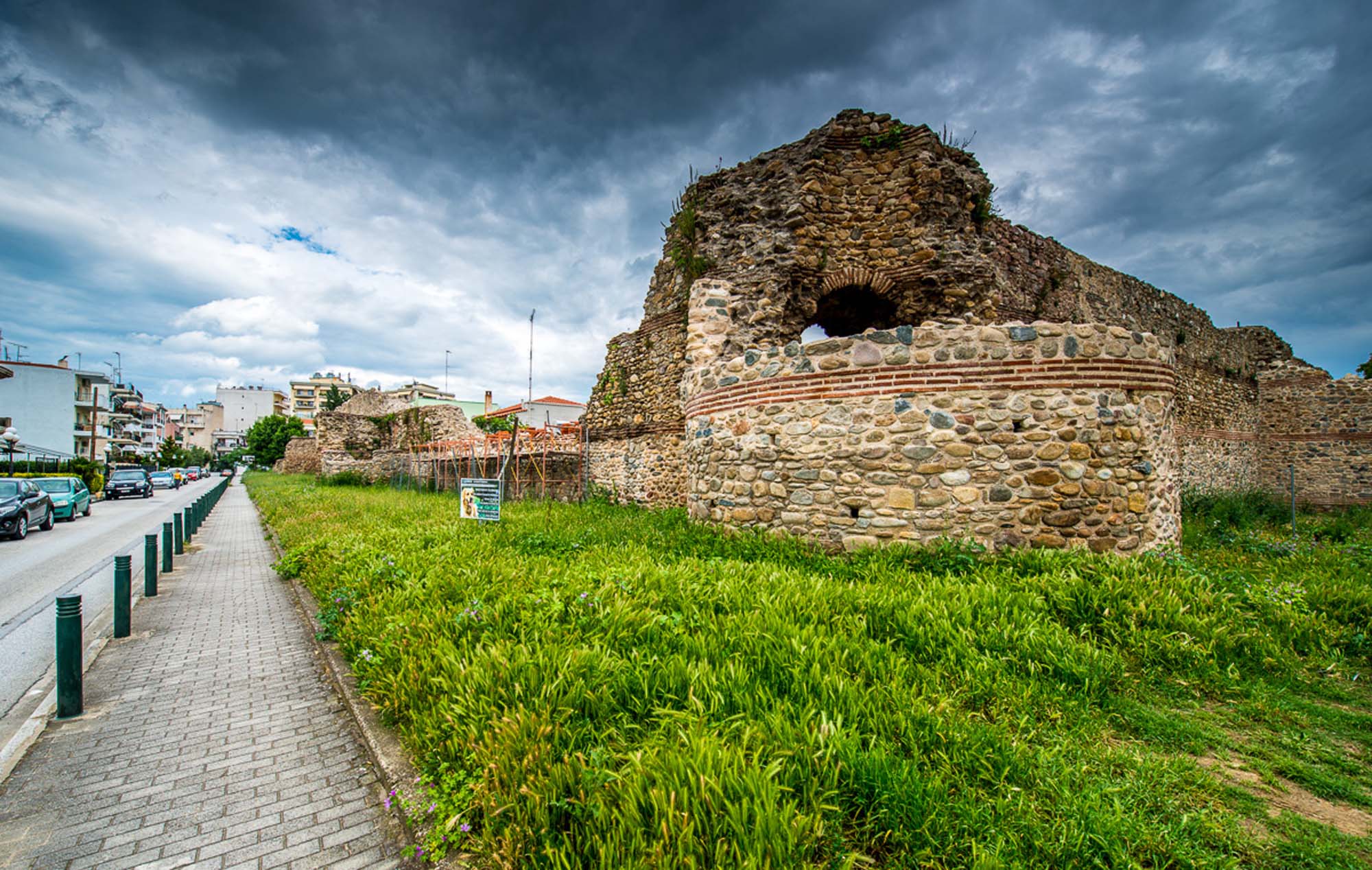
The castle of Komotini is the largest and oldest monument of the city. It was originally constructed as a secure overnight stop for travellers at the junction of major routes, the most significant of which was the Via Egnatia. Opinions differ as to the time of its construction. Initially, it was thought to have been built around the 4th century AD. by the emperor Theodosius I (379 - 395 A.D.). This view was supported by Komotini-born professor of History and Folklore at the Aristotle University of Thessaloniki, Stilpon Kyriakidis, who claimed that a young man had once read the now-lost inscription "Built by Theodosios". However, later archaeologists and architects date the construction of the Castle to the 10th or 11th century. In fact, it is only from the mid-14th century onwards that historical references to the castle begin to appear. The location at that time was called Koumoutzina. Its shape is roughly square with each side about 120m long. The construction of the wall has been done mainly with river stones and strong tile. It featured a total of 16 towers, with 12 rectangular towers and 4 circular ones positioned at the corners. It reached a height of 9,60 metres. The castle had two main entrances—on the north and east sides—and a postern gate on the south. Over the centuries, and especially after the destruction of nearby Mosynopolis in 1206, it became a refuge for local populations, drawn by the protection it provided. The wall remained intact until 1364-1365 when Komotini fell into the hands of the Ottomans. During their invasions, the Ottomans destroyed parts of the castle and reused its stones to construct mosques and other public buildings. This destruction continued under Bulgarian occupation between 1913 and 1919, during which several towers and much of the remaining wall were demolished. The final blow came in 1951, when the Greek administration regrettably demolished part of the structure to make way for Sofouli Street. Today, extensive conservation, restoration and promotion efforts are under way to preserve and highlight the monument. Inside the castle stands the Holy Metropolitan Church of the Dormition of the Virgin Mary, built in 1830.