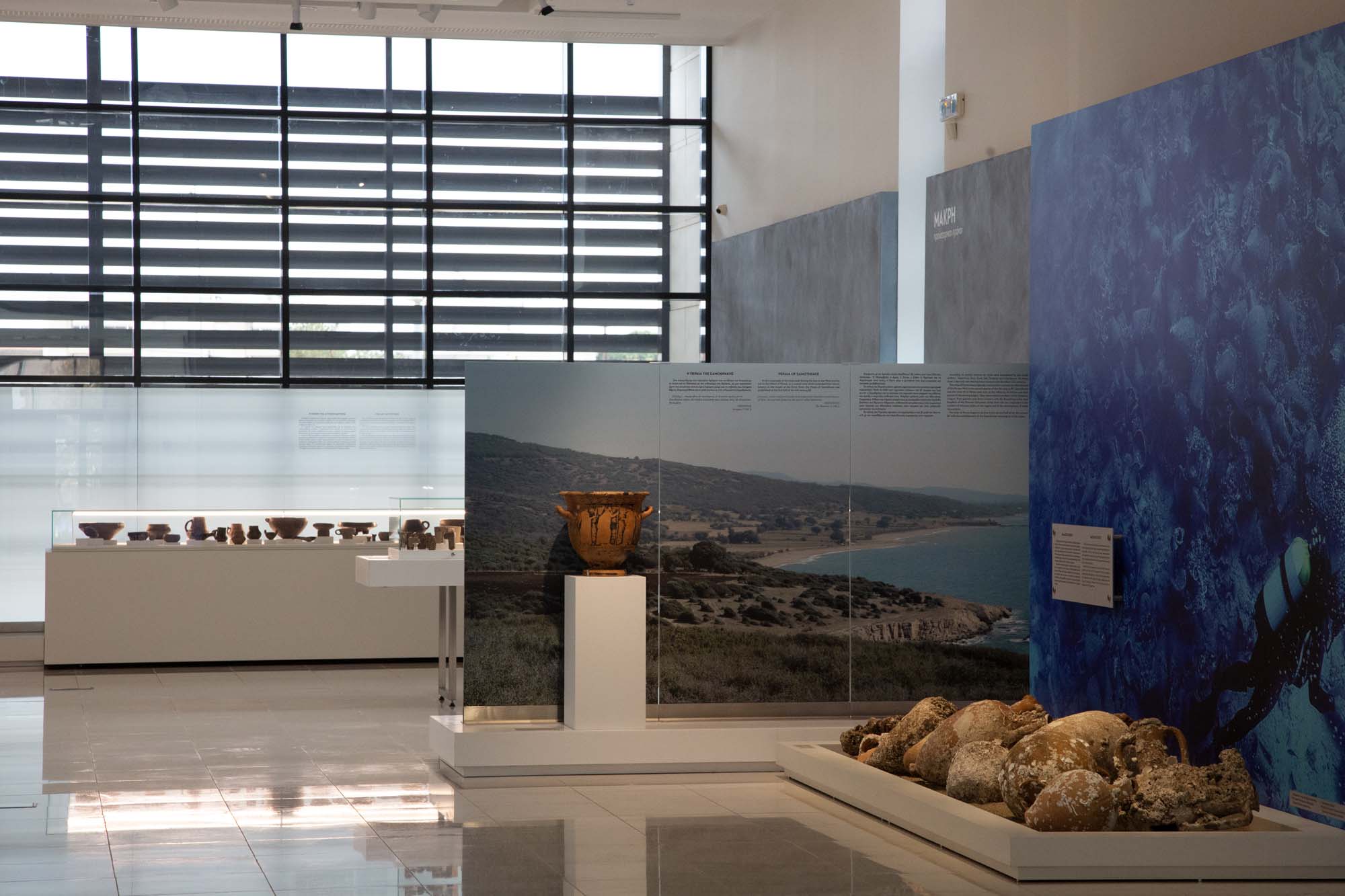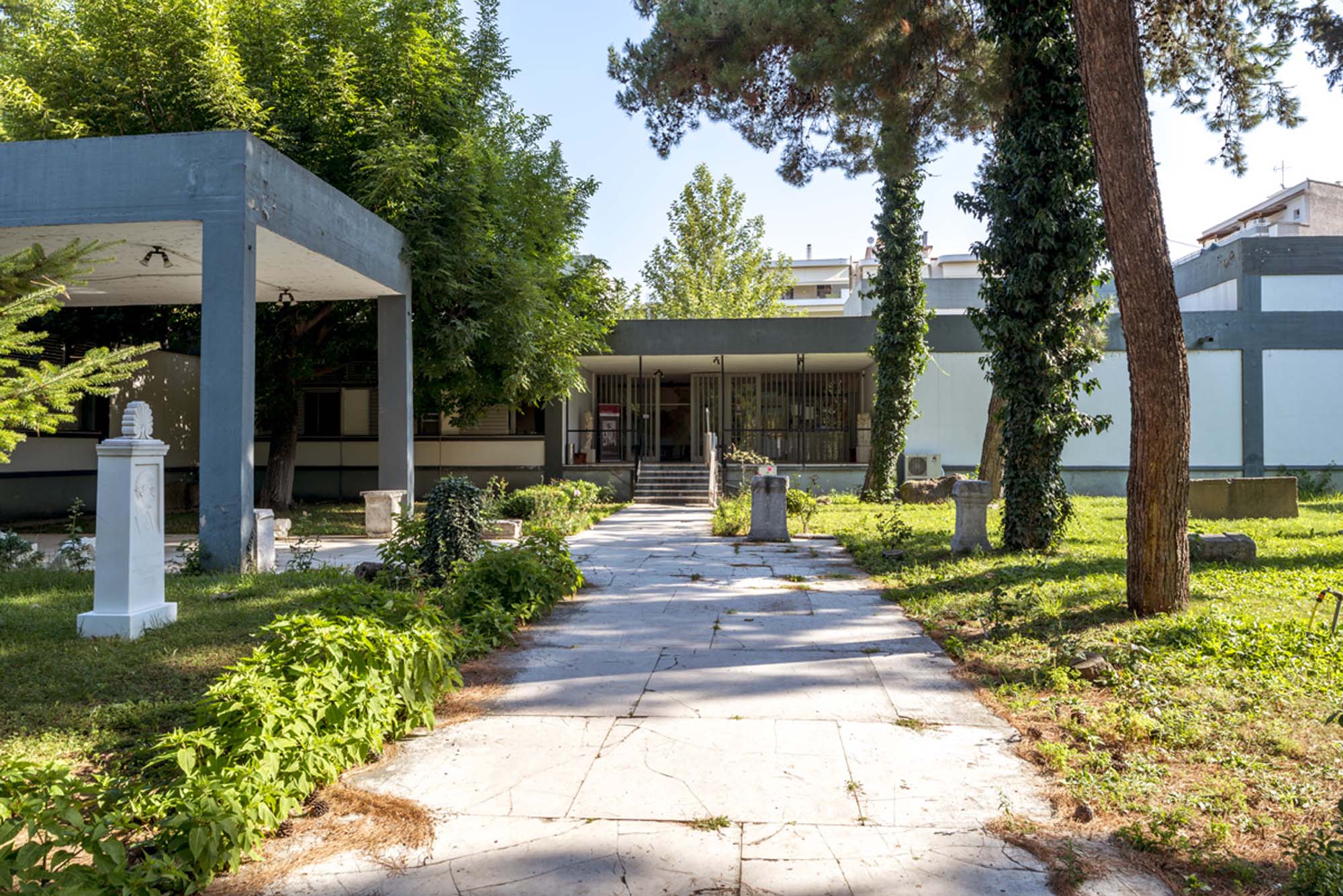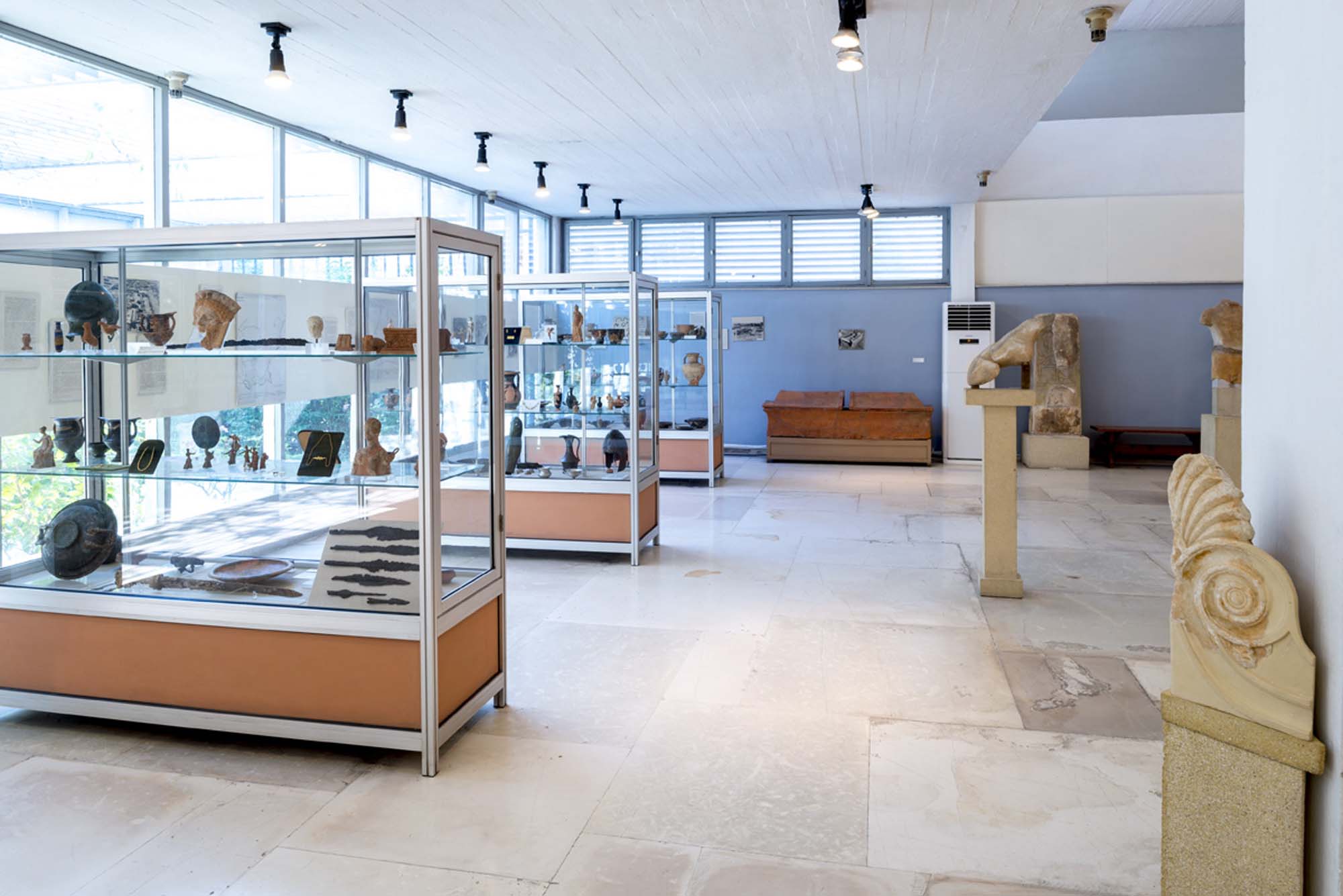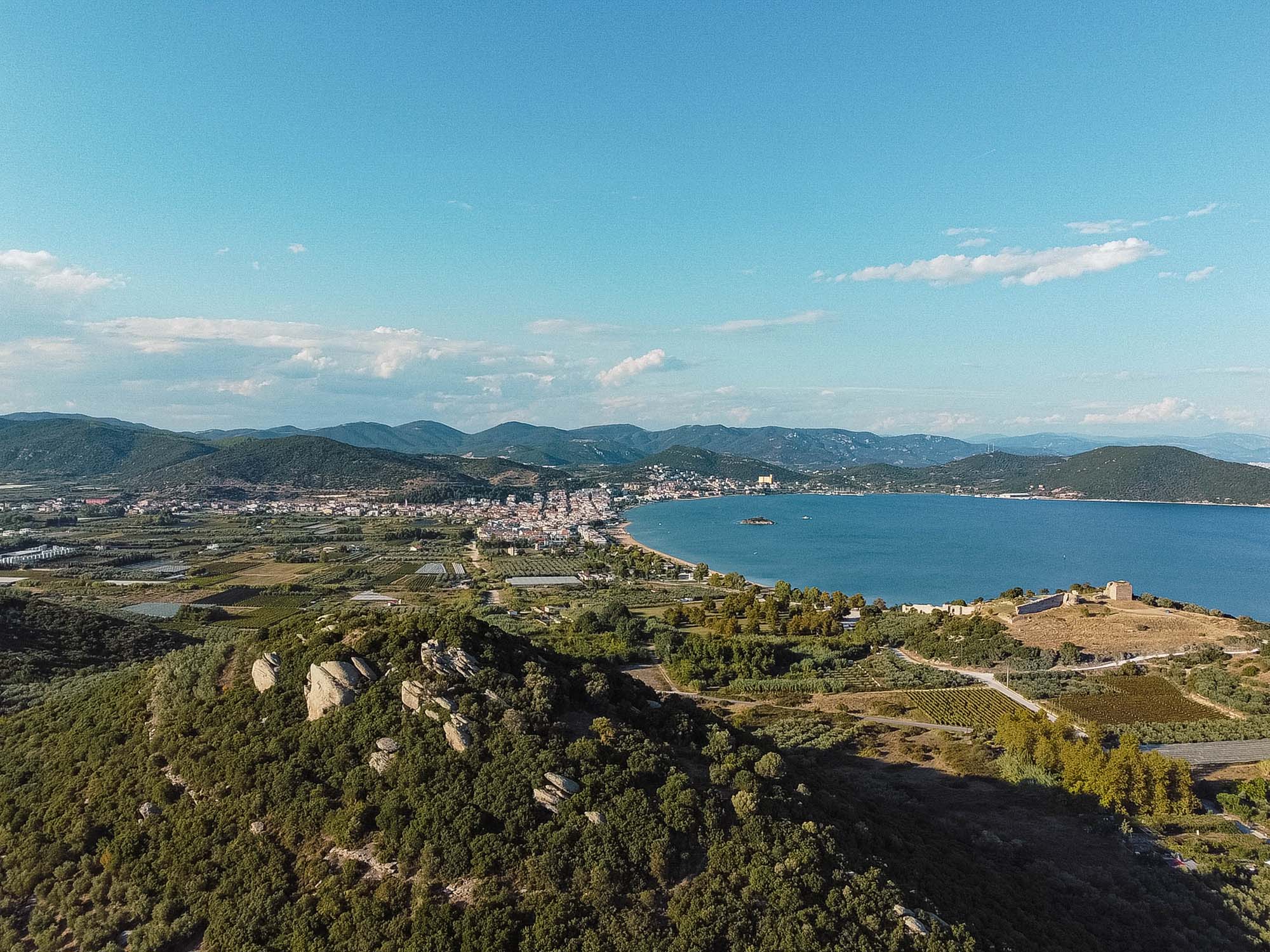




Archaeological Museum of Drama
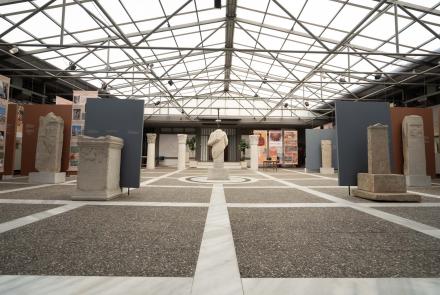
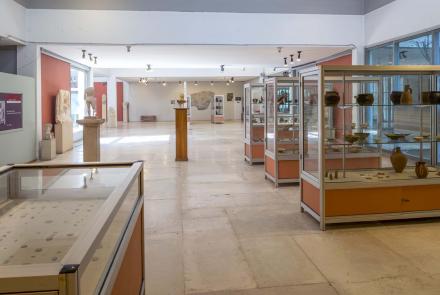
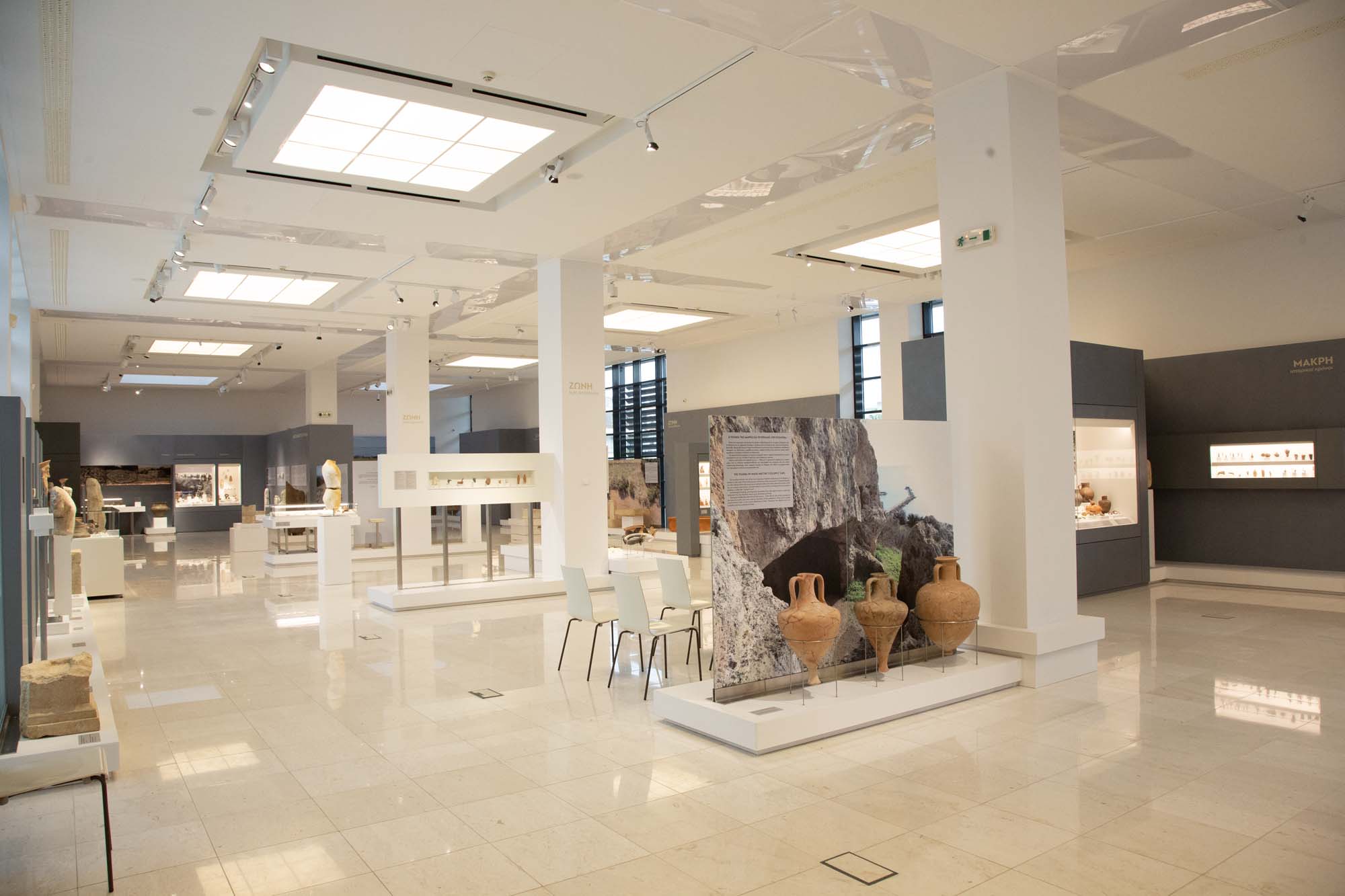
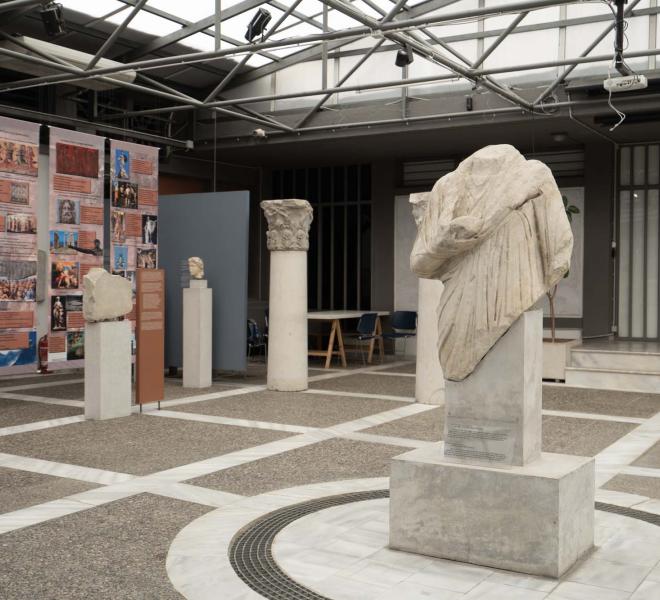
The Archaeological Museum of Drama was built by the Municipality of Drama and later granted to the Ministry of Culture. This initiative helped the local community expedite the establishment of an Archaeological Museum in the capital of this border prefecture. Although the museum building is still small, it marks the beginning of efforts to systematize archaeological research and promote the cultural identity of the region. The archaeological findings document the cultural history of Drama and the surrounding area, spanning from the nomadic hunters of the Middle Palaeolithic Age (50,000 BC) to the first farmers and herders in Neolithic communities (5,500-3,000 BC), and from the early patriarchal societies of the Bronze Age (3,000-1,050 BC) to the powerful clans of the Early Iron Age (1,050-700 BC).
According to philological tradition, the Thracian warrior tribes that inhabited the hinterland of Drama in historical times originated from warriors wielding iron swords, as revealed by excavation research in the burial mounds of the industrial zone of Drama. Starting in the 7th century BC, with the establishment of colonies from the South Helladic cities in Thassos and along the coast of Macedonia, Greek civilization began to penetrate the hinterland of the present-day Drama prefecture. Thassos and its coastal colonies between the rivers Struma and Nestos facilitated trade and cultural communication between central Thrace and the Greek city-states along the coast. Following the Thasians, the Athenians, Macedonians, and Romans successively strengthened the region's progress towards urbanization.
Pangaio loomed over the plain of Drama, leaving a significant mark on its history and culture due to its gold and silver mines and its identity as the sacred mountain of Dionysus. The worship of Dionysus served as a common reference point for both Greeks and Thracians, as supported by the offerings discovered at the sanctuary of the deity in the ancient settlement of Drama. Information regarding the region's history during the Archaic Classical period is limited, with few excavation finds available, as no large-scale excavations have been conducted to date. Nonetheless, it appears that strong Thracian kingdoms or autonomous city-states did not emerge during this time. Overall, the plain of Drama and surrounding semi-mountainous areas were historically regarded as peripheral to the Macedonian kingdom and later the Roman province of Macedonia, with Philippi serving as the primary urban centre.
Philippi remained the administrative and cultural hub even during the Early Christian Period (4th-6th century BC), when Drama was part of the diocese of Philippi. It was only after the dissolution of the ancient world in the 7th century BC and the decline of Philippi that the region began forming its own urban centre. During the Early Byzantine period, the polychnion (a small fortified post) or castle of Drama was established, with a military commander appointed to oversee the area. In the Late Byzantine period, the castle of Drama and its surrounding territory experienced successive conquests by the Latins, Byzantines, and Bulgarians, remaining under Byzantine control from the mid-13th century until its conquest by the Serbs in the mid-14th century. In 1371, it was reconquered by Byzantine Emperor Manuel II Palaiologos and served as an administrative centre and the seat of an archbishopric until 1383, when it fell to the Ottomans.
During the Ottoman period, Drama, bolstered by Turkish settlers from Asia Minor, became the primary urban and administrative centre of the region, directly dependent on Constantinople, the capital of the Ottoman Empire and the seat of the Ecumenical Patriarchate. The Greek Orthodox communities in Drama, like their counterparts in other enslaved regions, rallied around the Patriarchate to safeguard their rights and organize national defence through education. The economic prosperity of Drama, which thrived on rice and cotton cultivation in the 17th and 18th centuries, expanded in the 19th century with the cultivation and marketing of tobacco. This tobacco trade opened communication routes with Western Europe, bringing economic and cultural prosperity to Drama and its surrounding urban centres.
By the late 19th century, the region became a focal point of conflict due to the expansionism of the newly established Bulgarian state towards Macedonia, leading to its own struggles during the Macedonian struggle and the Balkan Wars. At the start of the 20th century, with the conclusion of the Balkan Wars in 1913, Drama and its region became part of the Greek state.
Prehistoric times (50,000-700 BC) in the area of today's Drama prefecture are represented by findings from excavation research conducted in the cave of the springs of Aggitis, where a settlement of Palaeolithic hunters was discovered. The findings consist of animal bones and stone tools dating back to the Middle Palaeolithic Age (Mustean period, 50,000 BC).
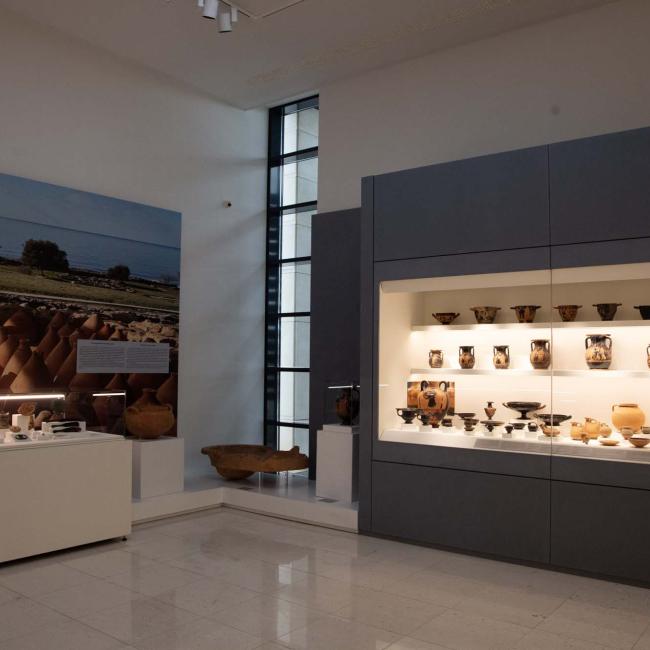
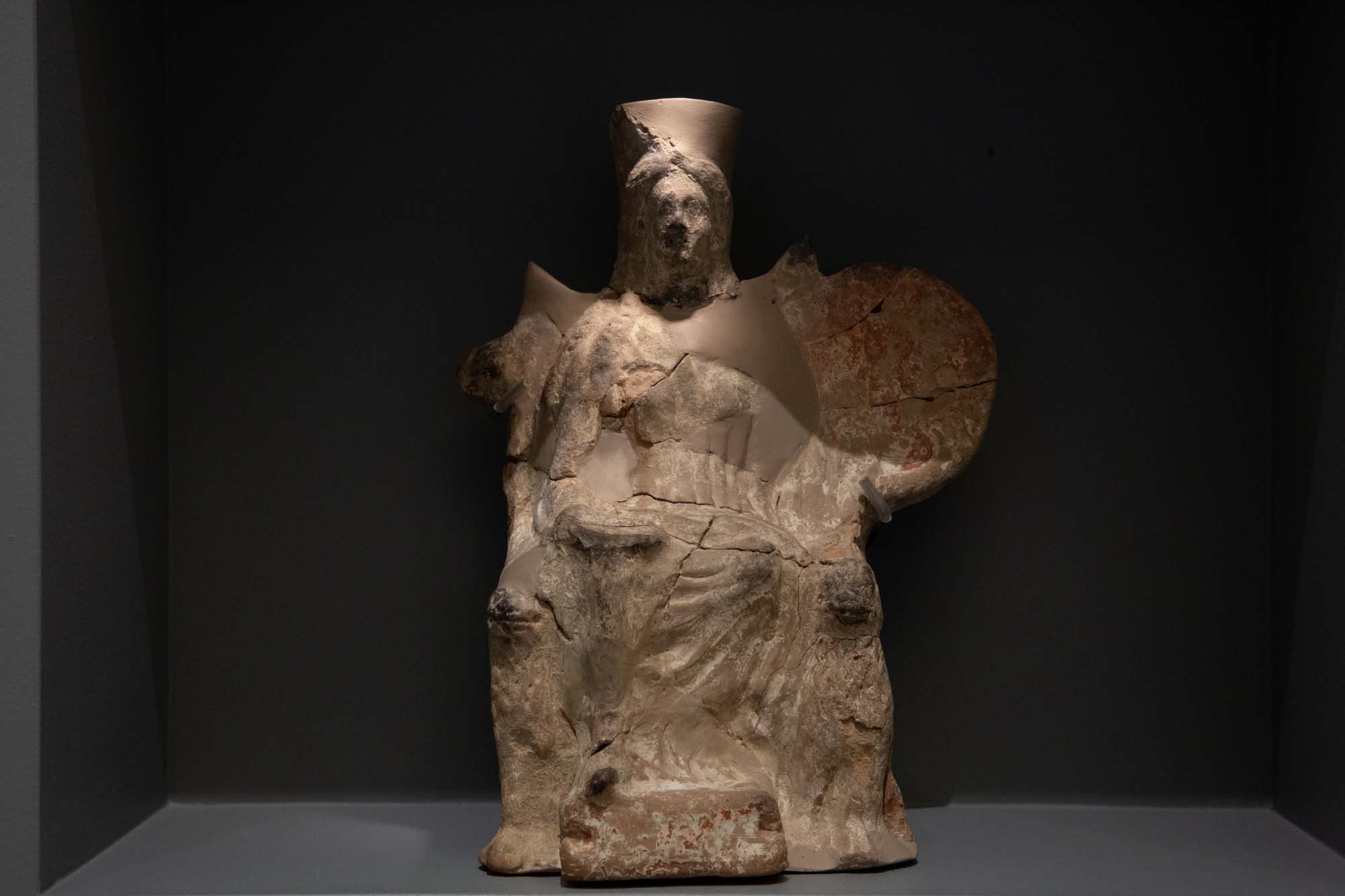
Around the middle of the 6th millennium BC, the first Neolithic farmers and herders appeared. A large number of Middle and Late Neolithic settlements testify to a population boom in the Drama basin from the middle of the 6th millennium to the end of the 4th millennium BC. Excavations in the prehistoric settlements of Sitagres and Arkadikos have yielded very important findings. Tools, jewellery, vessels with advanced firing and decoration techniques, represent the first technological achievements of Neolithic people associated with food production and storage, weaving, basketry, as well as their attempts to project their individuality and communicate with the forces of nature through figurines and ritual vessels.
At the end of the Neolithic period, in the prehistoric settlement of Sitagres, we find the first examples of metallurgy. The findings from Sitagres also represent the cultural image of the area during the Early Bronze Age (3000-2000 BC), a period of significant cultural change for all of Europe. During this time, the region of Drama, as evidenced by pottery, developed cultural relations with Central Europe and the north-eastern Aegean. At the end of the Late Bronze Age, finds from the burial mounds of Potami and the countryside indicate the region's contact with the continental Balkans and Central Macedonia, while local Mycenaean vases are the first examples of interaction with the Mycenaean world. Vessels, weapons, tools, and jewellery from the graves of the industrial zone of Drama reflect the cultural image of the region in the Early Iron Age (1050-700 BC).
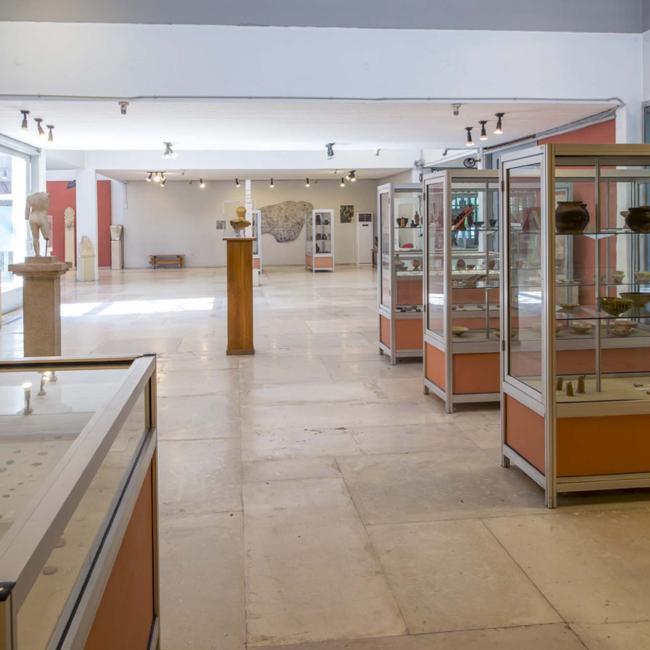
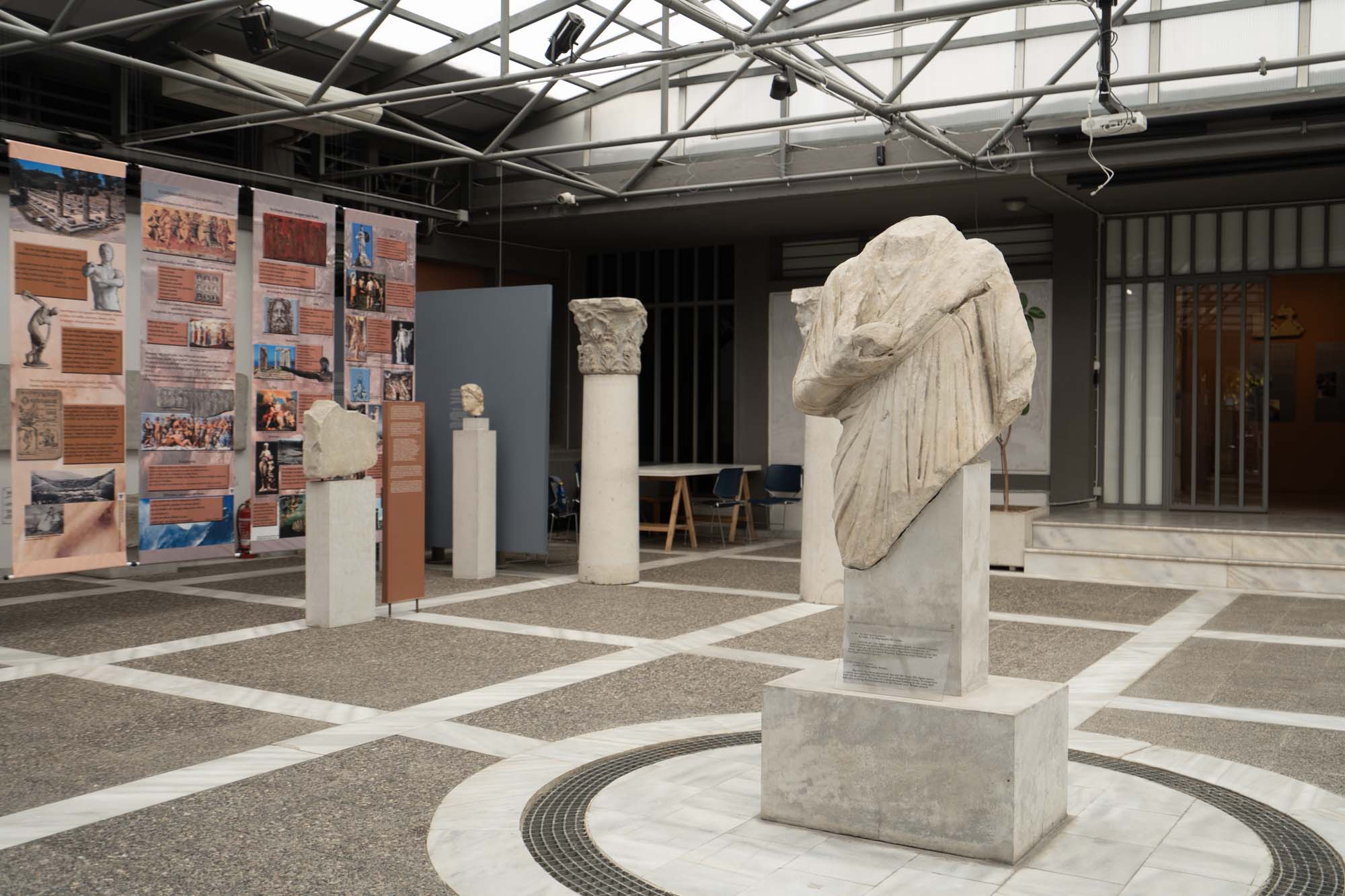
In the Early Period (700 BC-324 AD), wheel-thrown vessels with Early Geometric-type decoration emerge as the earliest evidence of the region's interactions with the coastal cities of Macedonia, primarily Thasian colonies. From the end of the 6th century to the beginning of the 5th century BC, Attic pottery and other artefacts, such as a Corinthian helmet from the settlement at Kalambaki, appear. The marble bust of Dionysus from the Sanctuary of Dionysus in the ancient settlement of Drama is the oldest known example of the worship of this god in the hinterland of Pangaio. The late Classical and Hellenistic periods are represented by numerous finds. The monumental building at Kali Vrysi, the offerings from the sanctuary of Dionysus, and the Macedonian tomb in the ancient settlement of Drama, along with burial finds in the cemeteries of the hinterland, testify to economic and cultural prosperity.
The hoard of 860 silver coins from Potami confirms that, with the region's incorporation into the kingdom of Macedonia, the new 'hard' coinage introduced by Macedonian king Philippus II began to replace the old coins of Thassos and its colonies. Sets of coins, or 'treasures', were often deposited as grave goods in vessels, mainly from local workshops. The stadium marker from the ancient settlement at Kalambaki exemplifies the road construction efforts during the Macedonian period. The mile marker of the Via Egnatia from the same area verifies that the great Roman road followed the network established by the Macedonians on its route from Amphipolis to Philippi.
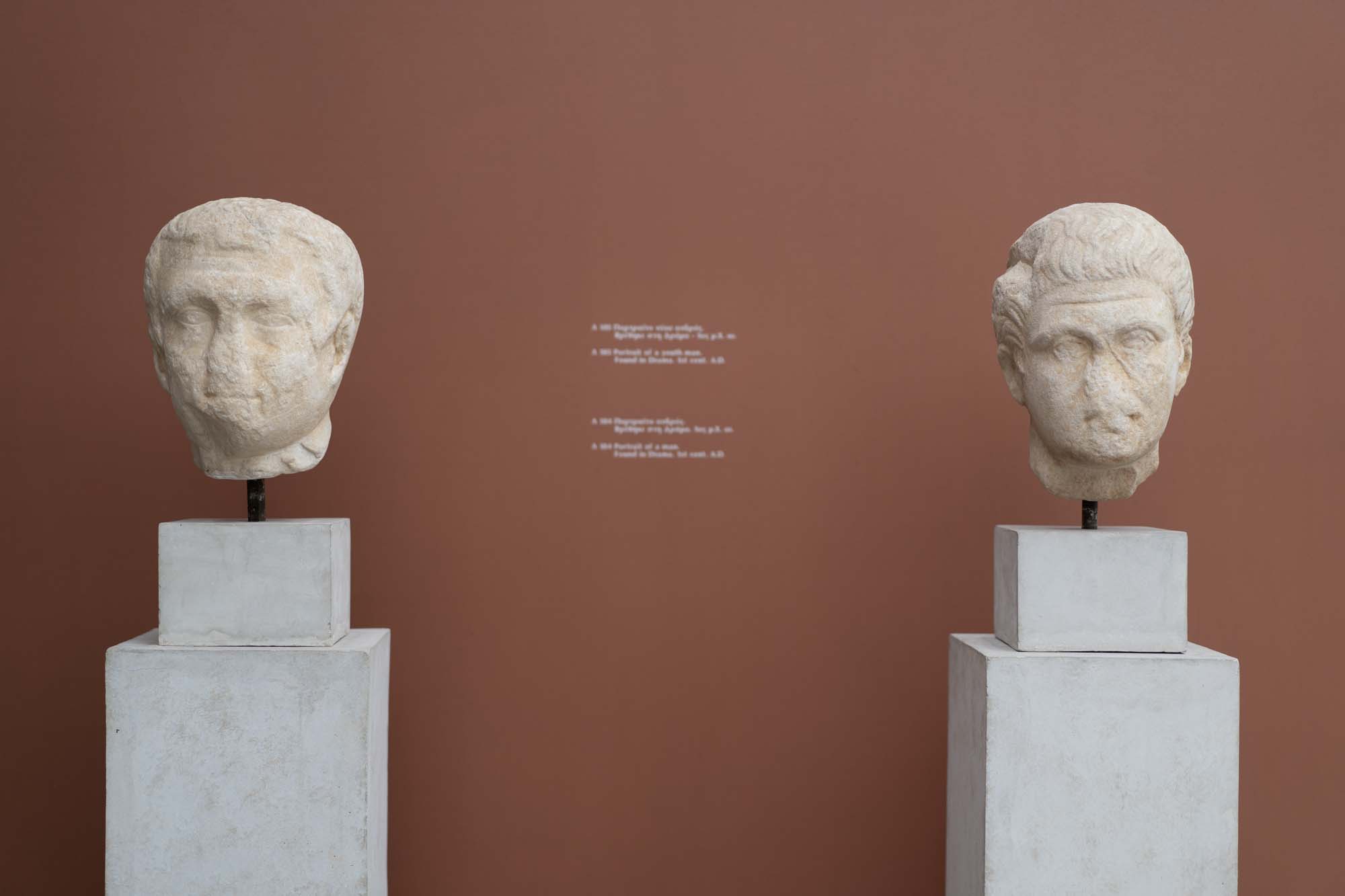
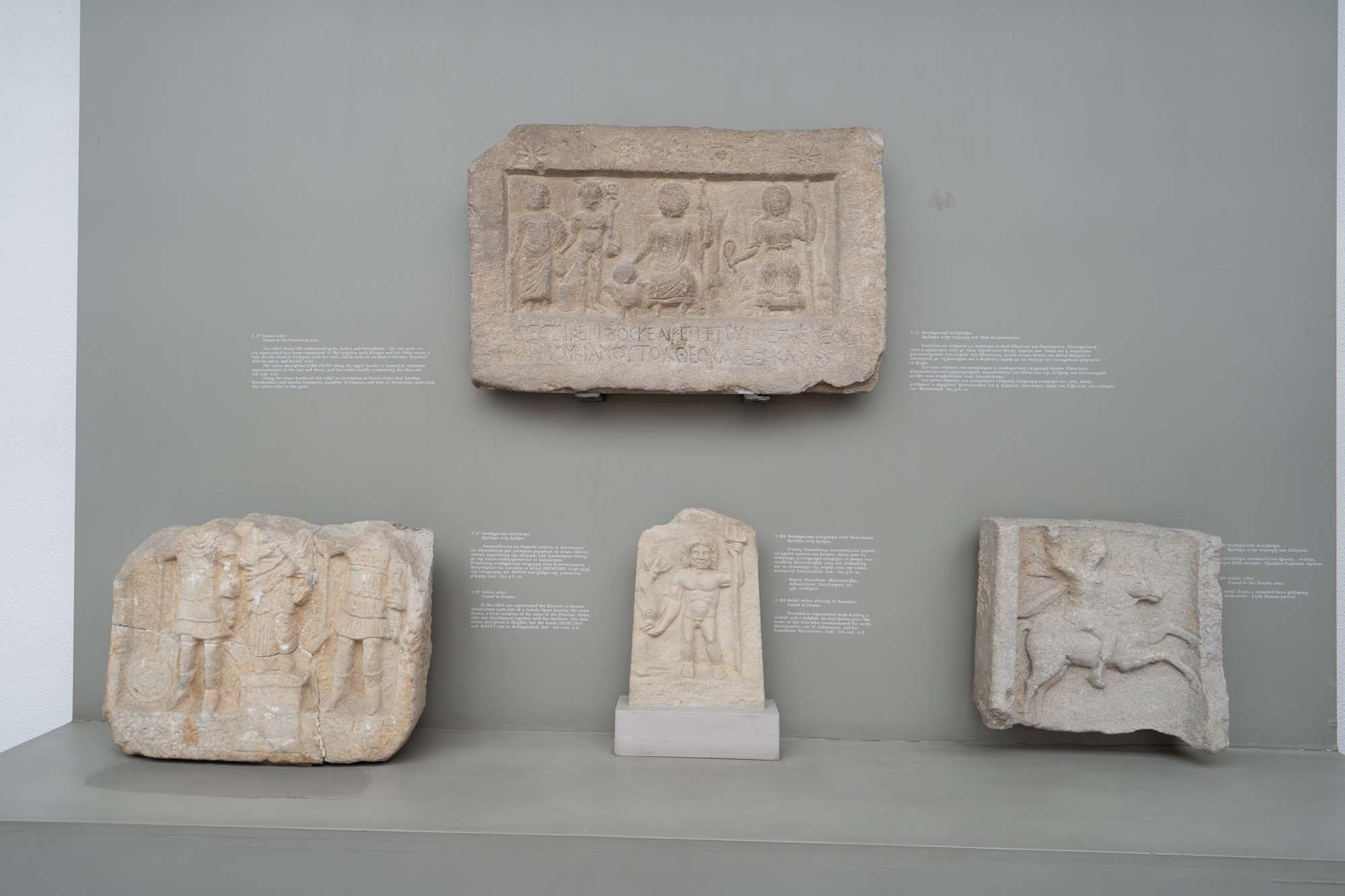
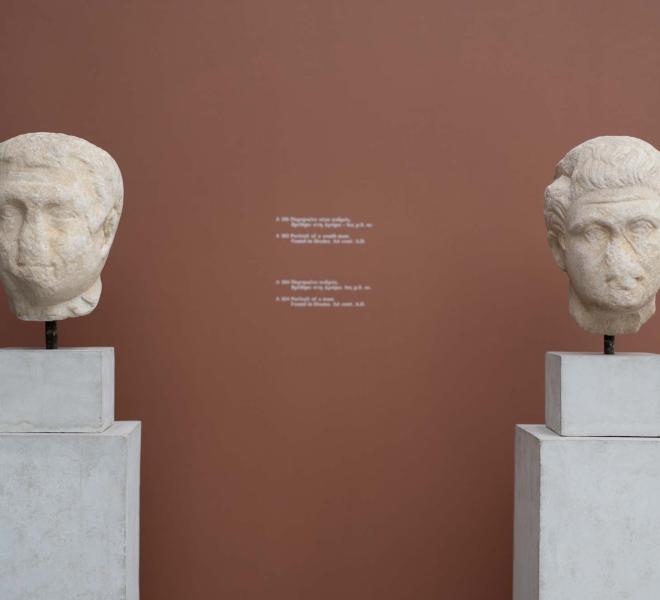
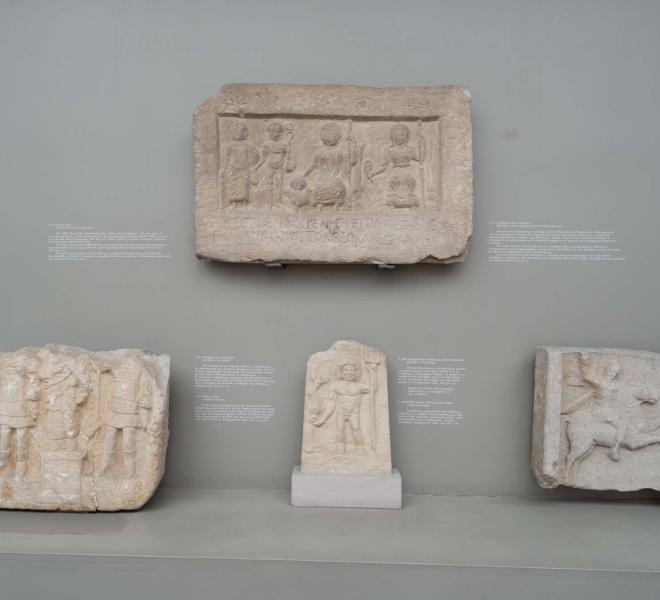
During Roman times, most of the present prefecture of Drama belonged to the rural area of the Roman colony of Philippi. The findings describe the coexistence of the Greek and Roman worlds in which the local Thracian tribes were integrated and assimilated. The bronze statuette of Zeus from Marmaria, attributed to the Roman period, represents an Early Classical statuette of Zeus known throughout the Greek world. The tombstone found in Grammeni commemorates the illustrious military career of Tiberius Claudius Maximus, the Roman legionary who, while fighting alongside Trajan in the Dacian Wars, captured and beheaded the last king of Dacia, Decebalus.
In Early Christian and Byzantine times (324 AD - 1383 AD), architectural sculptures testify to the quality of art that flourished in the hinterland of Drama during the 5th and 6th centuries AD, influenced by the artistic movements in the city of Philippi. Pottery and coins attest to the continuity of life in the early Christian settlement of Drama from the Early Christian period to the Late Byzantine period. Excavated finds from the plain of Philippi and the mountainous areas provide insights into the standard of living in the farmhouses of Philippi, as well as in the fortified citadels.