



Şadırvan Mosque and Arap Mosque
Şadırvan Mosque, Drama
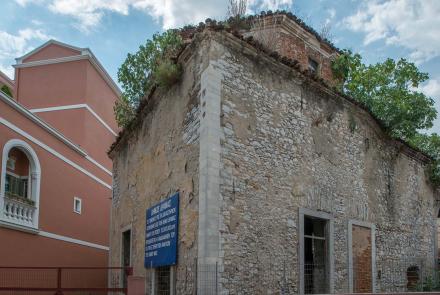
The Şadırvan Mosque is a small-scale stone structure featuring a rectangular floor plan. It encompasses a front entrance area with a gallery and a central prayer area. Located at the junction of Armen and Agamemnonos streets in the centre of Drama, this building was originally an Ottoman mosque, with its minaret dating back to the second half of the 15th century. An inscription at the entrance indicates that it was renovated in 1806, and the painting of the main façade occurred after 1829. The mosque remained in operation until 1922, at which time it was known as Şadırvan Mosque. Following the Asia Minor Catastrophe, between 1922 and 1927, the mosque served as temporary housing for refugee families. From 1927 to 1981, it was the publishing site for the local historical newspaper 'Tharros.' In 1983, it was declared a listed monument, but over the years, it fell into disrepair due to the collapse of its roof. In 2012, Raycap purchased the site and undertook its restoration as a heritage site, demolishing two adjacent blocks of flats – one of which had its mid-wall built over the monuments windows. Additionally, they digitized the archive of the newspaper 'Tharros,' making it freely accessible on an online archive website. The restoration and conservation work on the paintings took three full years, from 2015 to 2018. One of the most striking features of the monument is the artwork adorning its main façade. The new exhibition and cultural space, owned by Raycap and spearheaded by local businessman Mr. Kostas Apostolidis, will serve as a permanent presence for the Benaki Museum in the city, featuring exhibitions that will be regularly updated.
Arap Mosque, Drama
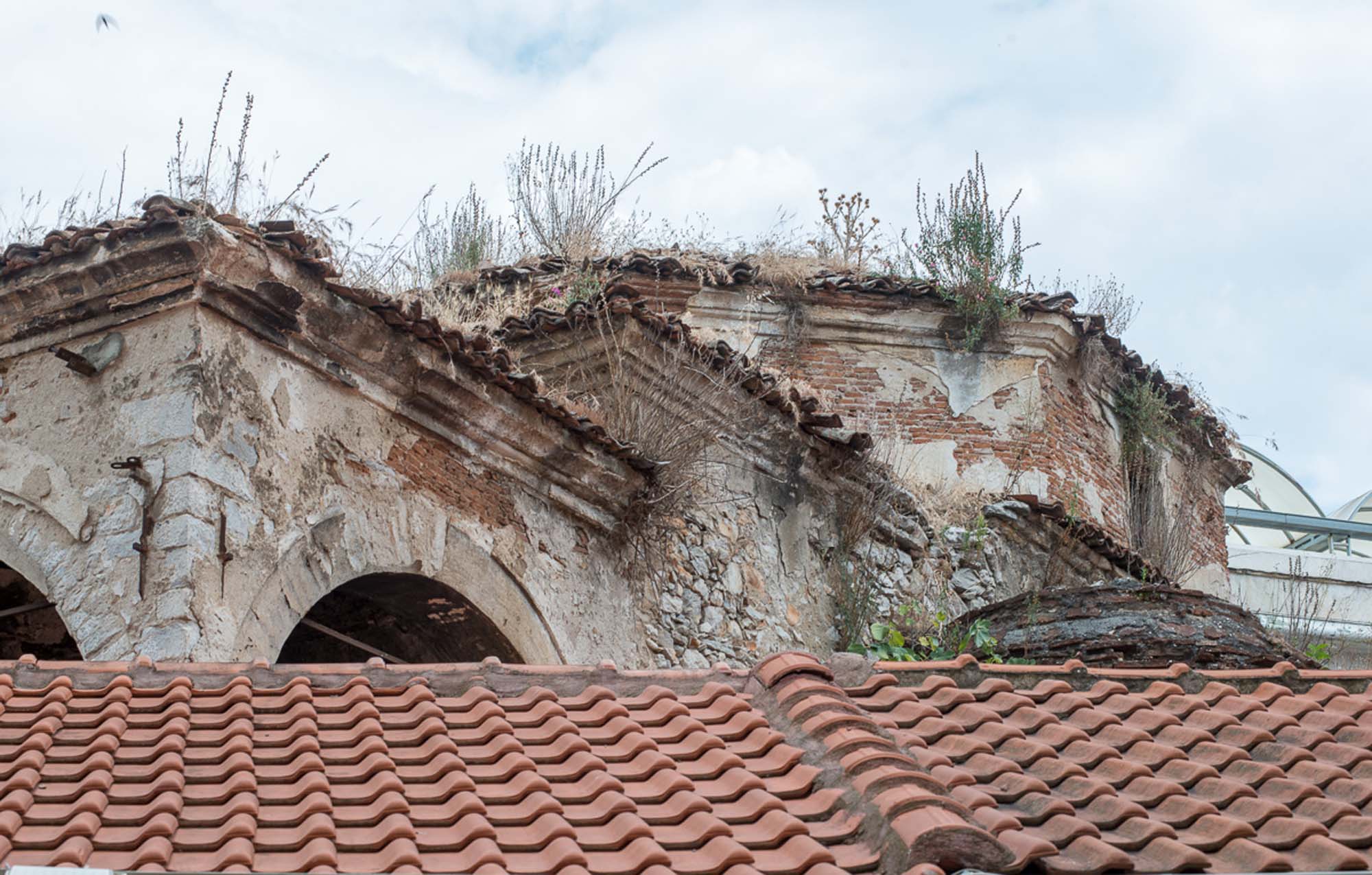
In the administrative centre of the old Muslim quarter of Drama, at the junction of M. Alexandrou, K. Paleologou, and L. Lamprianidou streets, stands one of the city’s most significant monuments: the Arap Mosque. Greek sources have identified this mosque as the Ak Mehmet Aga Jamisi, one of the twelve mosques that existed in the city in 1667 AD. However, this identification is incorrect; it is the Arap Mosque, as confirmed by Mr. Christos Kalogirou, the former owner of the building. Notably, this mosque was also referred to as Kanlı Çeşme Camii, meaning 'the mosque of blood,' due to the custom of circumcision performed there by the Turks. Built between 1850 and 1875 under Abdulaziz, the Arap Mosque was one of twenty-nine mosques that existed at the end of the Turkish occupation. According to the Turkish historian Eyverdi, it was situated in the Mahala of Dervish Bali, opposite the Turkish administration buildings. The mosque was under waqf ownership, meaning it belonged to the sacred lands of the Muslim community. Reportedly, in the early 20th century, when the mosque ceased serving as a place of worship, it was repurposed as a hammam, although no taps or facilities have been found to confirm this function. In 1922, the mosque was sold to private owners and transformed into a choir school. During the Bulgarian occupation, it suffered violation and looting at the hands of conquerors. After Drama's liberation, the mosque became home to the city's conservatory. Over the years, it changed hands several times, ultimately ending up with civil engineer Mr. Christos Kalogeros. Due to its architectural significance, it was designated a historical monument in 1977, with oversight by the 12th Ephorate of Byzantine Antiquities of Kavala. In 2001, the Arap Mosque came under the jurisdiction of the Municipality of Drama for conversion into a cultural centre. This mosque follows the single-tower design with a dome at the front, characteristic of the third period of Ottoman architecture (1730-1876). It is a rectangular stone building crowned with an octagonal dome, covered in Byzantine-style tiles. A stoa stands before the main façade, serving as a gathering place for worshippers, especially those who arrived late or could not fit inside. A double door leads into the main section of the mosque, which features an interior area with a gallery that provides access to the minaret. An inner circular staircase made of stone and brick leads to the minaret balcony, where the muezzin would call believers to communal prayer. On the south-eastern wall of the mosque, a small niche, known as the mihrab, indicates the direction of Mecca, where the imam would stand to coordinate the prayers. The mosque's interior decoration primarily consists of frescoes adorning both the interior walls and the exterior entrance. The building, dating back to 1977, was designated a historical monument because of its unique architecture, while in 2001, it became part of the municipality of Drama. Restoration efforts are currently underway to preserve the painted decorations, marble, and ceramic stone elements. This project is set to be completed by the end of 2023 and will serve as a cultural venue for exhibitions of painting, photography, and visual arts, as well as book launches and various other events.