



Macedonian tomb in Stavroupoli
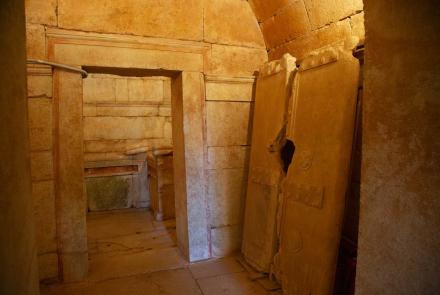
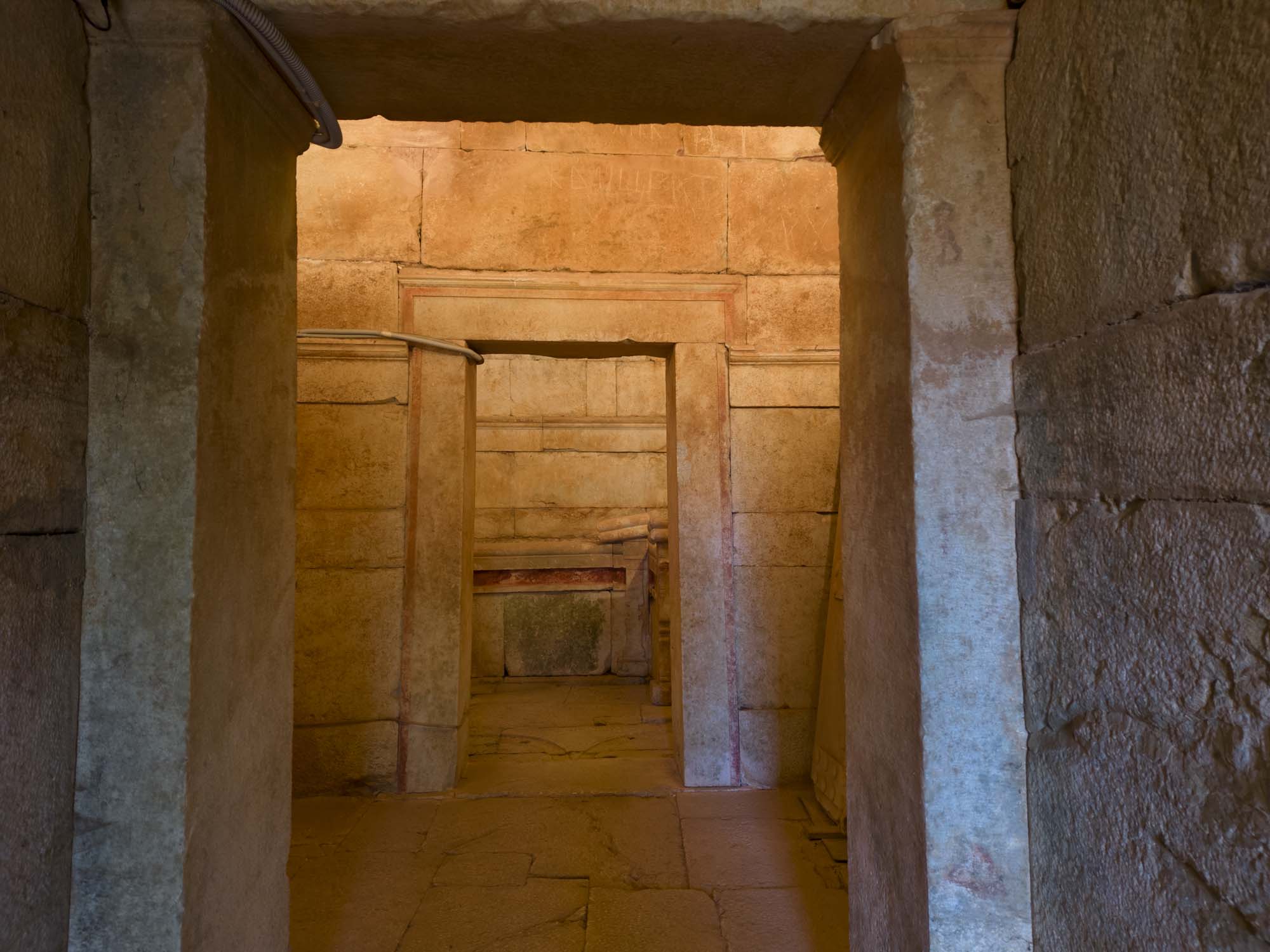
The Tomb of Stavroupolis is the largest, best-preserved, and most impressive Macedonian tomb in Thrace. Situated south of the town, it is located a short distance from the road leading to Komnina. Based on its architectural style and the few findings within, it is dated to the first half of the 2nd century BC. The tomb is believed to be associated with a settlement located 500 meters further south at the site of Mytikas Komnina, which was inhabited from the Early Iron Age (9th–8th century BC) through the Byzantine period. The tomb contains all the key architectural features typical of Macedonian tombs. It is an underground, constructed monument comprising an entry passage (dromos), a vestibule, and a burial chamber, all covered with barrel vaults. Built from local marble using the pseudo-isodomic masonry technique, the tomb is oriented east to west, with its entrance on the western side. The entry passage has two sections: an open-air part and a roofed section measuring 4.65 meters in length and 1.59 meters in width. The entrance to the passage was sealed externally with large rectangular marble slabs. At its other end, a door leads into the vestibule, composed of two pilasters and a lintel. The vestibule, measuring 3.13 meters in width and 2.12 meters in length, connects to the burial chamber through another door constructed with monolithic pilasters and a lintel. This inner door was secured from the inside with marble panels engraved with architectural details, such as depictions of nails. The right pilaster bears the letters Α, Β, C, and D, painted in red using the encaustic technique. The burial chamber is 3.13 meters wide and 3.155 meters long. At the rear of the chamber are two marble funerary couches positioned at an angle, each featuring double marble headrests (biclinal couches). The foot of the couches retains traces of painted decoration, also executed using the encaustic technique. A third couch was added at a later time, but it no longer survives. Both the vestibule and the burial chamber have marble slab flooring, while the base of the barrel vault is decorated with friezes featuring Ionic and Lesbian kymations. The tomb was found looted, with its marble doors shattered. Inside, only two small gold rings, a tiny gold bead, and fragments of figurines, including three Erotes and two female figures, were discovered. The Tomb of Stavroupolis exhibits two distinctive features compared to other Macedonian tombs: the presence of a roofed dromos and the lack of plaster coating on its interior walls. The painted decoration was applied directly to the marble surfaces using the encaustic method, and traces of this can still be seen on the architrave of the vestibule entrance, the doorway of the burial chamber, and the decorative friezes. The tomb had long been known to local villagers. The first archaeologist to visit the site was Ch. Makaronas in 1951, who conducted a small excavation. The primary excavation was carried out by him in October 1953. In 1997, D. Triantafyllos performed stabilization work on the monument and, in collaboration with the Municipality of Stavroupolis, included it in a specialized program for its promotion and preservation.