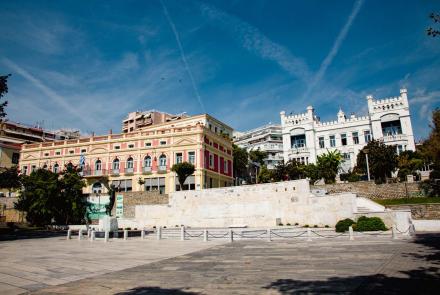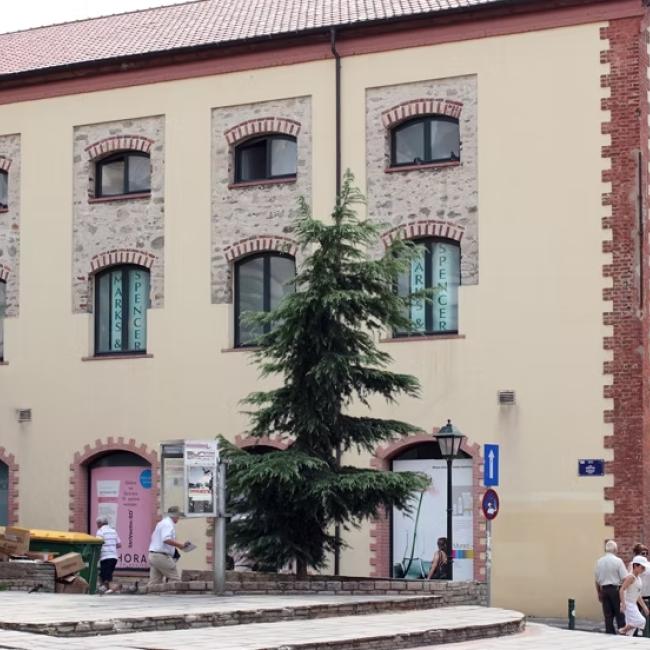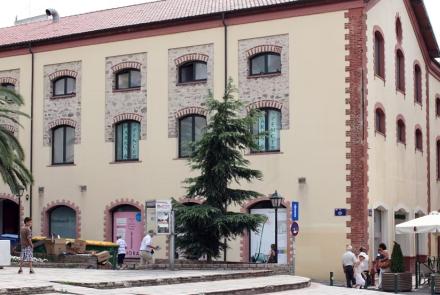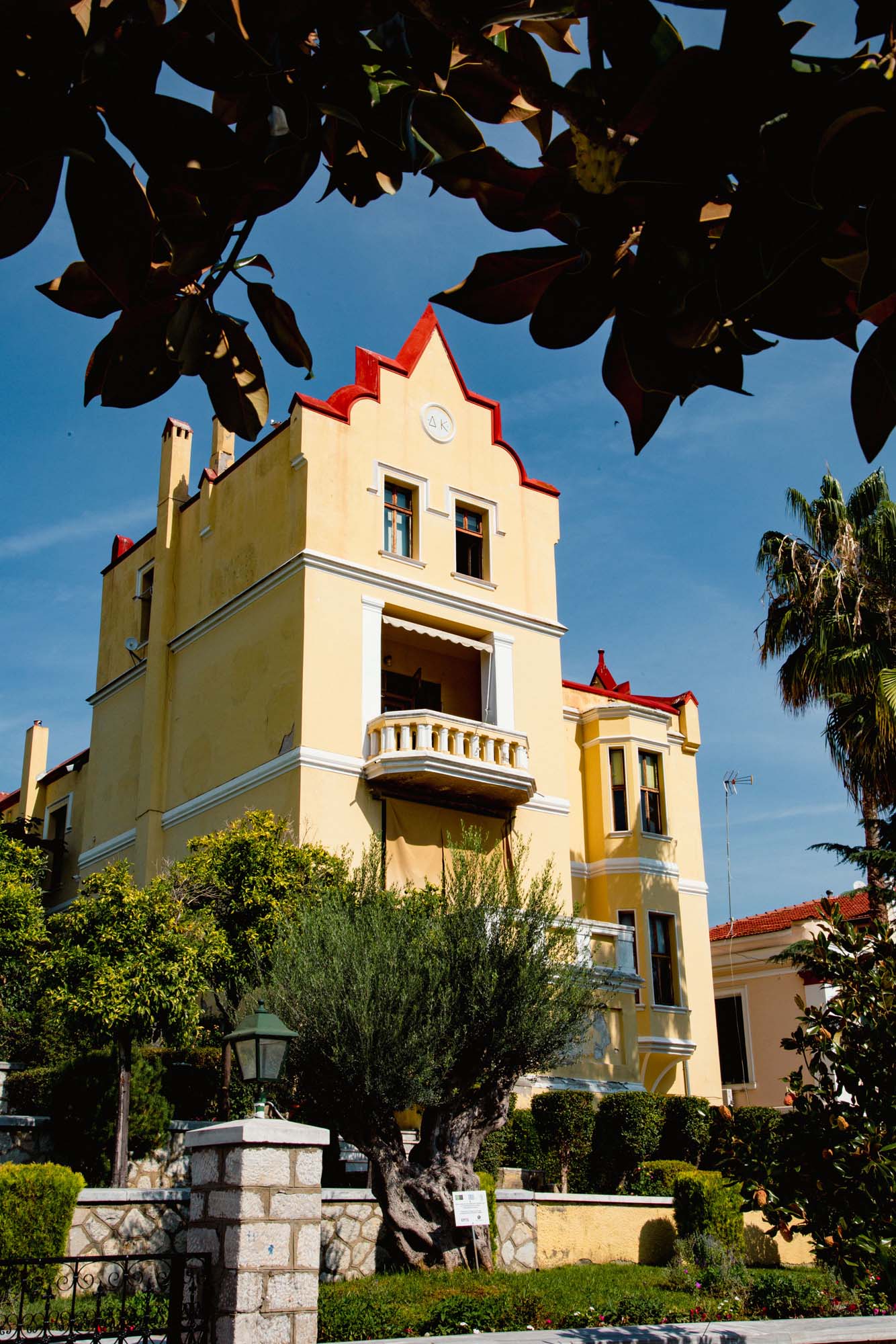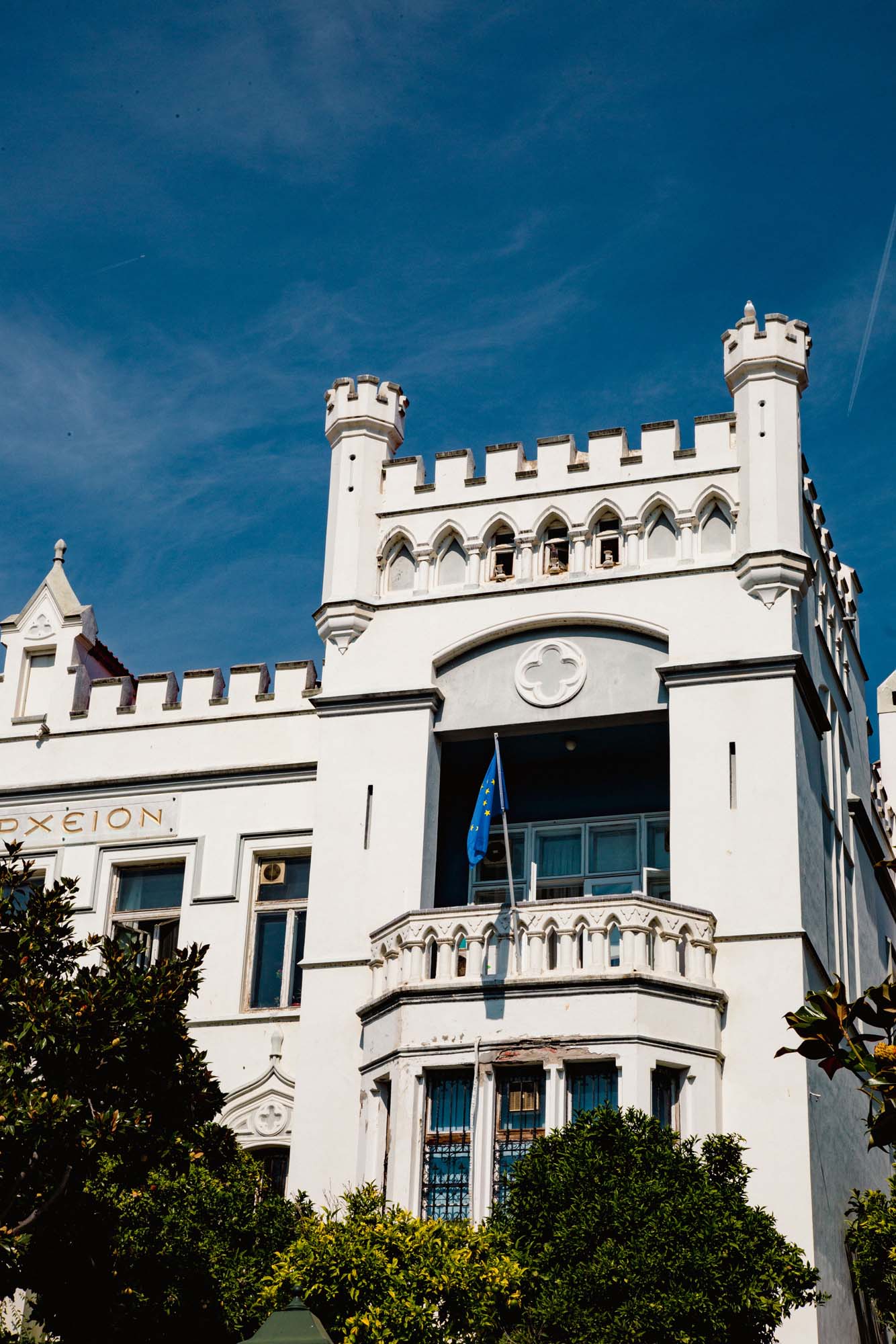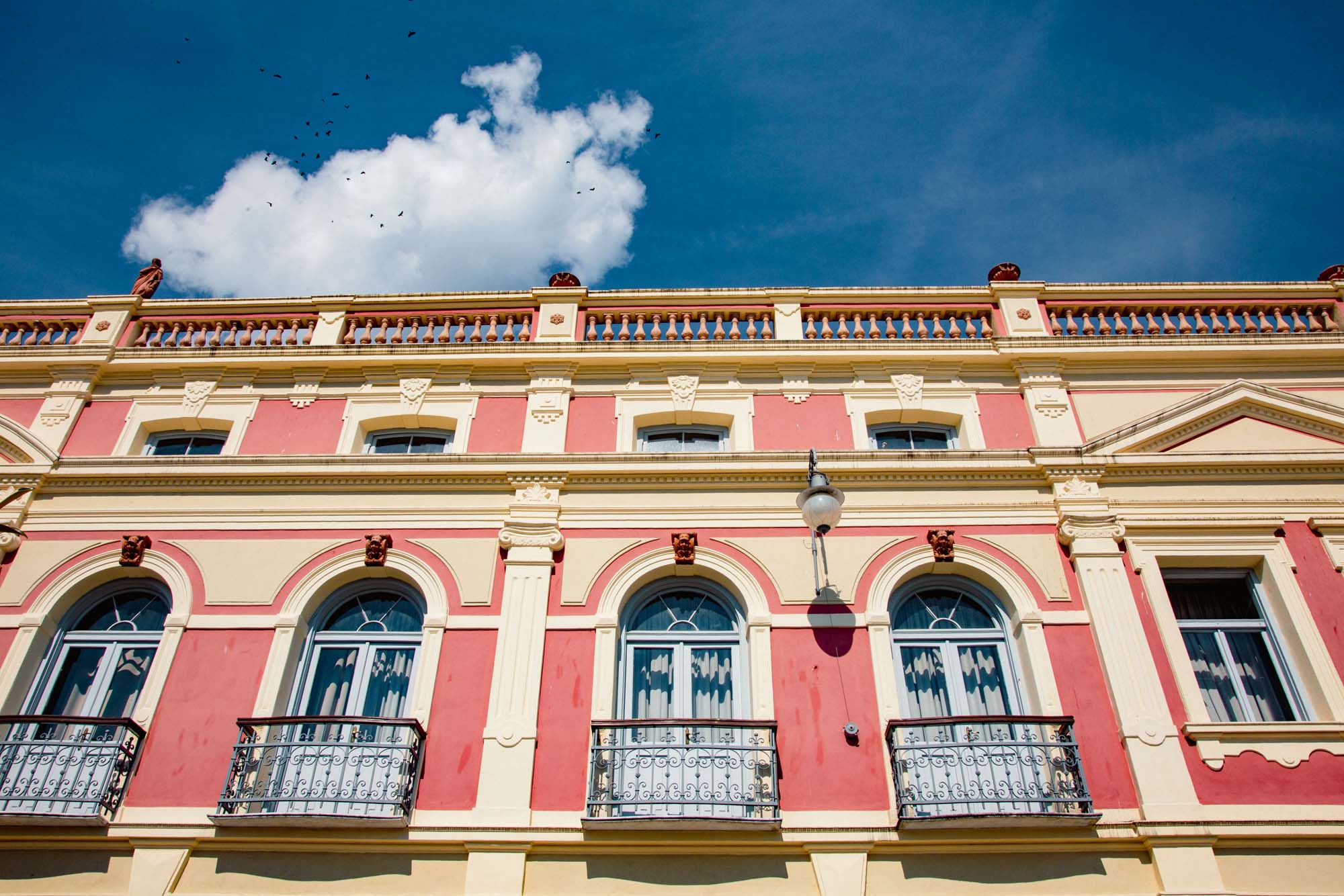




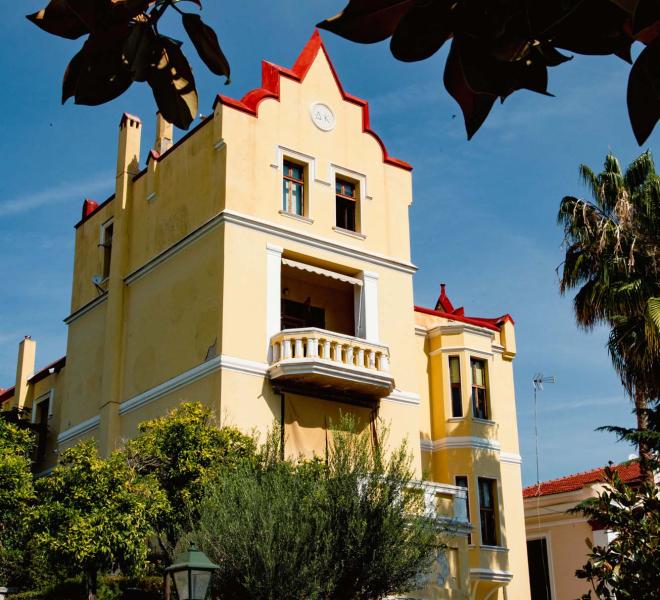
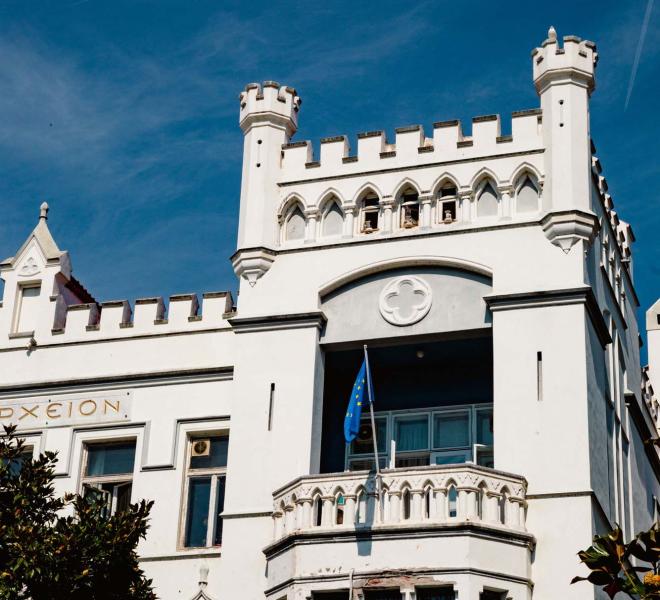
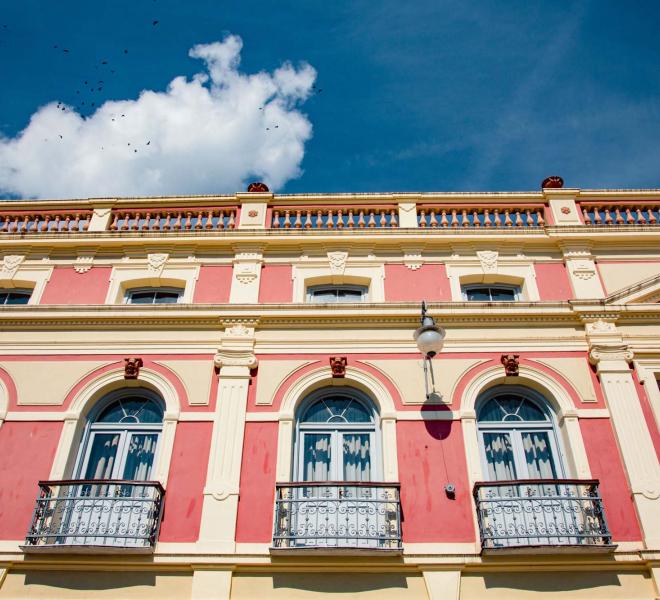
Kyprou Street with the neoclassical buildings
One of the city's most scenic walks begins at Kapnergatis Square and leads down cobbled Kyprou Street, lined with beautiful neoclassical buildings from the tobacco era, to the Municipal Garden.
Kapnergatis Square, at the junction of Kassandrou and Averof Streets, is the second most important square in the city after Eleftherias Square. The square is home to the imposing Municipal Tobacco Warehouse and the Kapnergatis Monument, after which the square is named.
The Kapnergatis Monument, created in 1986 by the renowned Greek sculptor Dimitrios Armakolas, honours the tobacco workers' movement. The sculpture depicts two men and a woman, symbolising the participation of women in the struggle. The detailed depiction of hands emphasises the strength, skill and dedication of the workers, representing both their labour and their resilience.
Starting from Kapnergatis Square, the cobbled Kyprou Street offers a picturesque stroll past landmarks such as the Lazaristes Monastery, the Wix Mansion, the Town Hall, the Big Club and the Tokos Mansion. This street showcases the city's architectural heritage from its prosperous tobacco era.
On the left side of Kyprou Street is the Municipal Garden, which extends to Eleftheriou Venizelou and Averof Streets. Built between 1922 and 1924, the garden was once a wild wooded area with evergreen trees dating back to 1913. It was later cleared and turned into municipal property, becoming a central meeting place for the city's residents.
In the centre of the garden once stood the War Memorial, a 3-metre-high marble lion monument erected in 1923 to honour the heroes of Kavala's liberation struggles from 1912 to 1922. The lion sat atop a large mound inscribed with the names of heroes and adorned with intricately carved laurel wreaths. However, during the Bulgarian occupation, the lion was removed and relocated to Perigiali, serving as the emblem of the Bulgarian army camp. After the liberation, the memorial was restored to its original site and later relocated to the Courthouse Square near the Kamares. After 1922, the Municipal Garden became the city's only open space, hosting large gatherings. Surrounding the garden were prominent tobacco-related businesses and merchants' residences. The garden also housed three water fountains, the only ones in the area at the time.
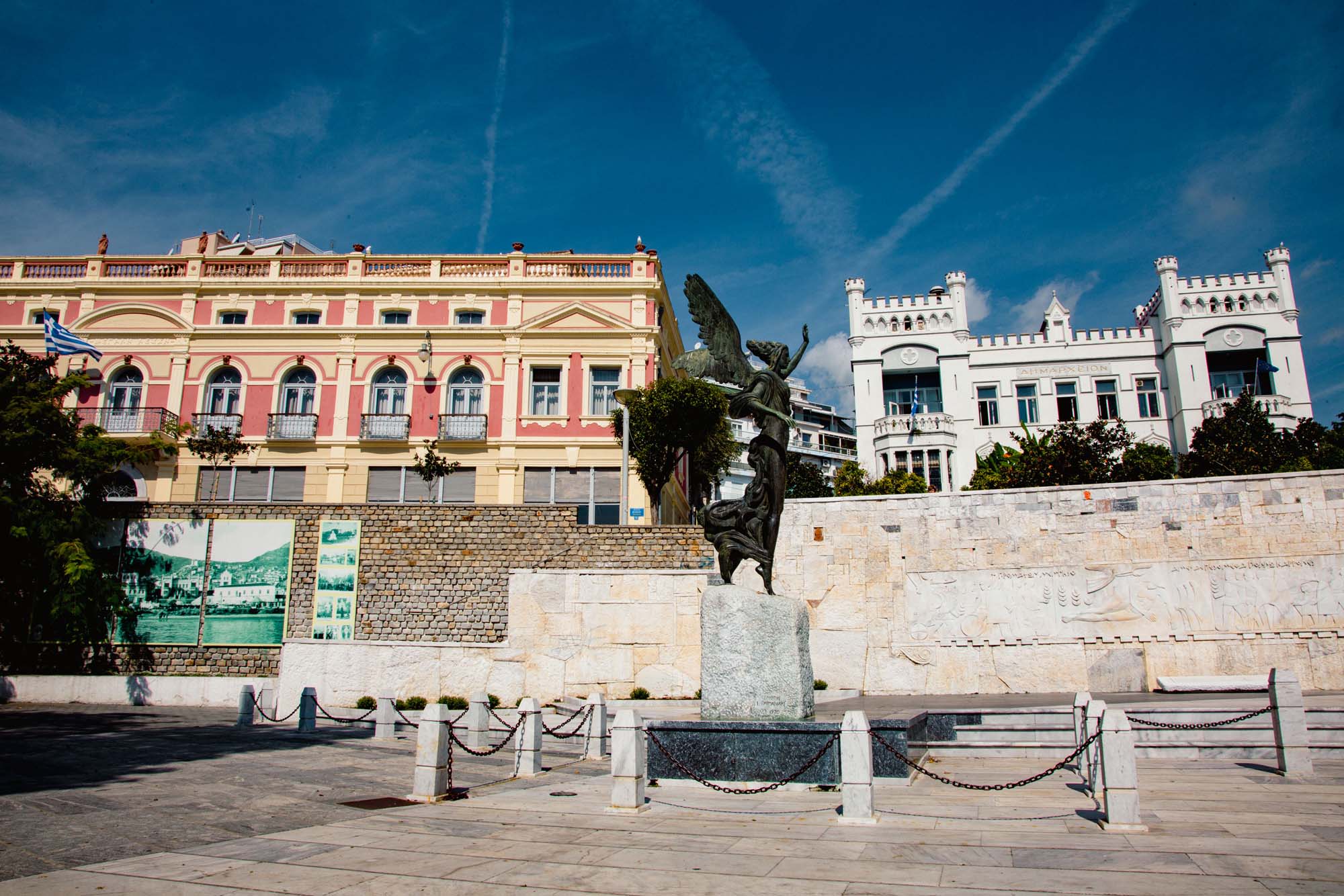
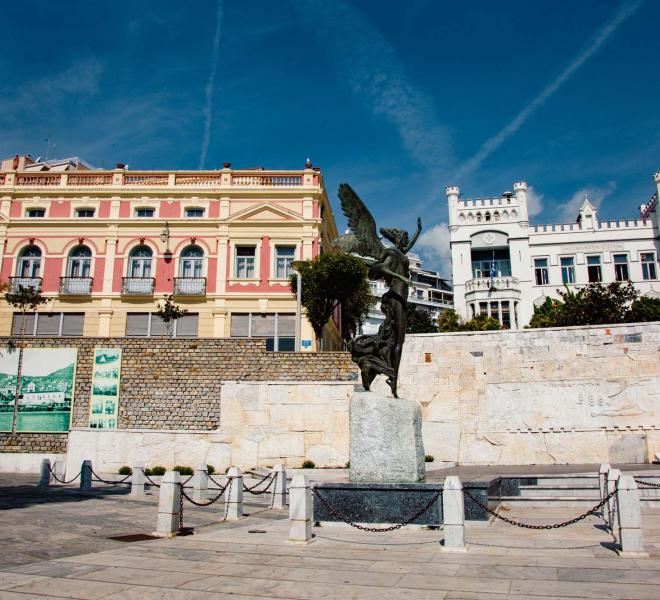
In place of the old war memorial, a new Monument was installed, created by sculptor Dionysios Gerolymatos, alongside another statue, the Winged Victory, a work by Ioannis Parmakelis. These were inaugurated in July 1970. The monument bears the relief inscription 'Promachon Memniso (Remember the Defenders)' and depicts a wounded soldier being offered laurels by Marathon fighters, Byzantine warriors, and 1821 revolutionaries. Additional sections honour Macedonian fighters and soldiers from the 1940 battles, showcasing continuity between past and present.
The bronze Winged Victory statue is an ancient symbol. Like the famous Victory of Samothrace and the Victory of Paeonius in Ancient Olympia, it symbolizes triumph through sacrifice.
To the east of the Municipal Garden, in the building that now houses the Hellenic Telecommunications Organisation, once stood a two-story structure called the 'Reading Room.' This housed Kavala's first Tobacco Workers' Union, 'Evdaimonia,' regarded by labour movement historians as the first workers' union in the Balkans during the Ottoman period, as well as the Cultural Association 'Aeschylus.'
Apart from its historical significance, the Municipal Garden serves as a recreational area. It features a fountain adorned with a seal sculpture, surrounded by benches where visitors can rest after a long city stroll. Additionally, a refreshment area named 'Kipos (Garden)' provides a spot for relaxation.