



Mansion Tsanakli - Municipal Library
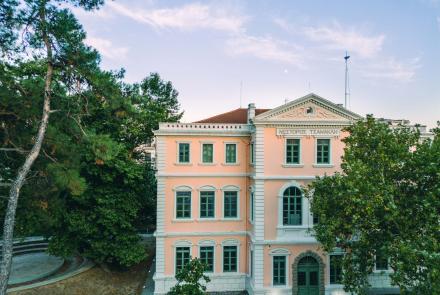
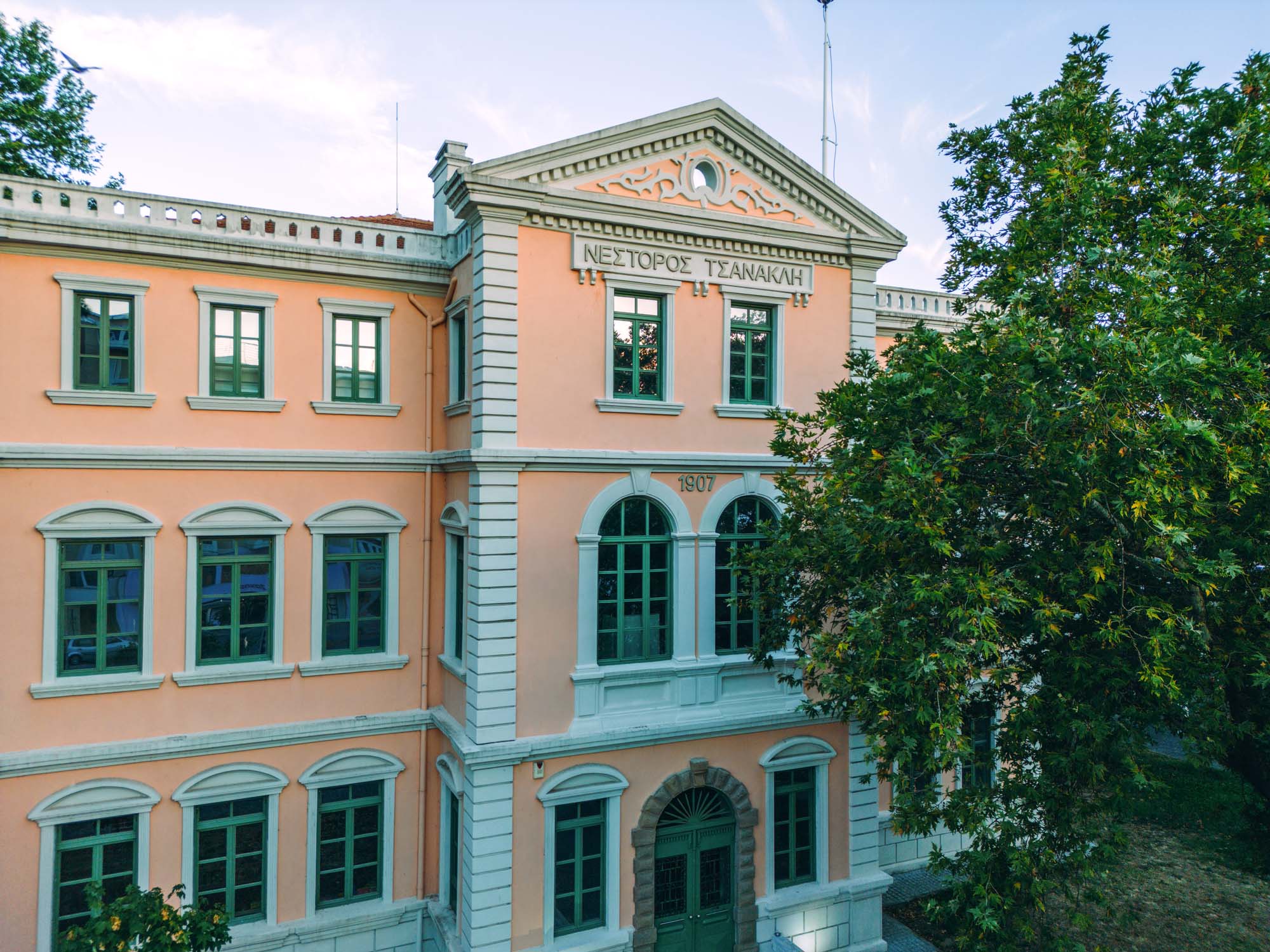
The Mansion of the Greek Urban School (Mansion Tsanakli) is one of the most impressive buildings in Komotini. The noble Komotinian Nestoras Tsanaklis emigrated to Egypt, where he amassed great wealth as the owner of tobacco and wine factories— even establishing cigarette factories in the United States. The Ottoman administration of Komotini granted him the Municipal Garden of the People (millet bahçesi), located in the heart of the Greek quarters, where he generously funded the construction of a boys’ school, operating as an Urban School (equivalent to today’s Gymnasium). The building was inaugurated in 1907. It was built according to the principles of eclecticism - the dominant architectural view of the 19th century. The school was named Tsanakleios School in honour of its benefactor, who, until 1913—when the region came under Bulgarian control—sent 200 gold pounds annually to cover the salaries of teachers serving the Greek community. It operated as an urban school until 1913, after which the Bulgarian authorities re-purposed it between 1913 and 1919. Following the withdrawal of the Bulgarians and the arrival of the ENTENTE forces in 1919, the building was used as an orphanage. In 1923, after the relocation of the General Administration of Thrace from Hadrianopolis, it became its headquarters until 1950. After the abolition of the institution, the building successively housed the Prefecture of Rhodope (1945–1972), the Secondary Technical School of Komotini (1972–1974), and the Rectorate of the Democritus University of Thrace (1974–2000).
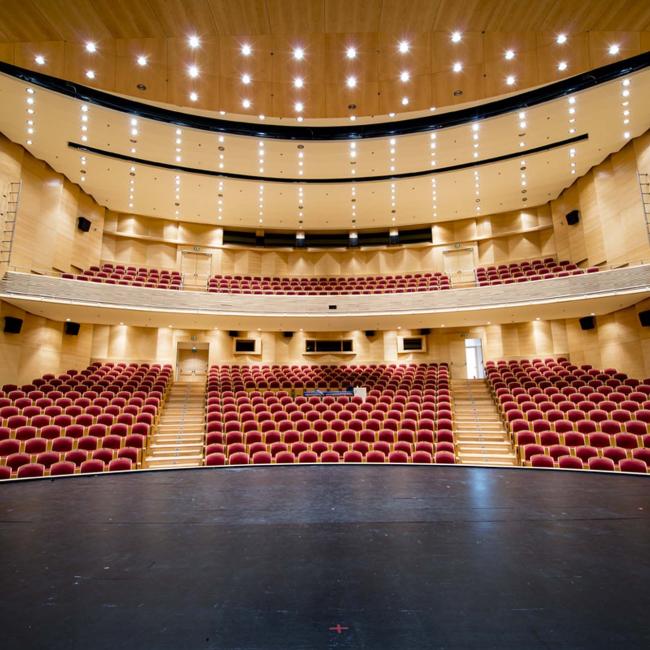
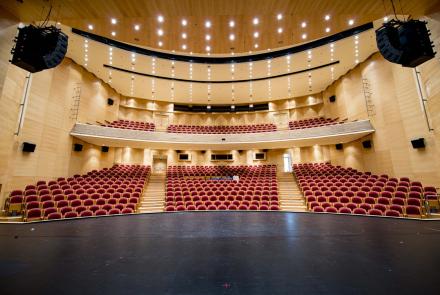
Following various disputes and claims, ownership was finally granted to the Municipality of Komotini, which, with the support of European programmes, restored the building. Since 2020, it has housed the Municipal Library, the Karatheodoris Museum, and a branch of the Hellenic Open University. The Municipal Library of Komotini was founded in 1954 and is a source of learning, education and information accessible to all citizens. The library has 30,000 books, magazines and archives of the local press, while on the 2nd floor there is a reading room. Small-scale events, lectures and book presentations are often held in the appropriately designed space on the 1st floor, with a capacity of about 70 people.